Showing posts with label books. Show all posts

Monday, February 6, 2012

Library Haul

The Reservoir by John M. Thompson

Review from Amazon: On an early spring morning in Richmond, Virginia, in the year 1885, a young pregnant woman is found floating in the city reservoir. It appears that she has committed suicide, but there are curious clues at the scene that suggest foul play. The case attracts local attention, and an eccentric group of men collaborate to solve the crime. Detective Jack Wren lurks in the shadows, weaseling his way into the investigation and intimidating witnesses. Policeman Daniel Cincinnatus Richardson, on the brink of retirement, catches the case and relentlessly pursues it to its sorrowful conclusion. As the identity of the girl, Lillie, is revealed, her dark family history comes to light, and the investigation focuses on her tumultuous affair with Tommie Cluverius.


Tommie, an ambitious young lawyer, is the pride and joy of his family and the polar opposite of his brother Willie, a quiet, humble farmer. Though both men loved Lillie, it’s Tommie’s reckless affair that thrusts his family into the spotlight. With Lillie dead, Willie must decide how far to trust Tommie, and whether he ever understood him at all. Told through accumulating revelations, Tommie’s story finally ends in a riveting courtroom
climax.


Based on a true story, The Reservoir centers on a guilty and passionate love triangle composed of two very different brothers and one young, naive girl hiding an unspeakable secret. A novel of lust, betrayal, justice, and revenge, The Reservoir ultimately probes the question of whether we can really know the hearts and minds of others, even of those closest to us.

Solomon’s Oak by Jo-Ann Mapson

Review from Amazon: Glory Solomon, a young widow, holds tight to her memories while she struggles to hold on to her Central California farm. She makes ends meet by hosting weddings in the chapel her husband had built under their two-hundred-year-old white oak tree, known locally as Solomon's Oak. Fourteen-year-old Juniper McGuire is the lone survivor of a family decimated by her sister's disappearance. She arrives on Glory's doorstep, pierced, tattooed, angry, and homeless. When Glory's husband Dan was alive, they took in foster children, but Juniper may be more than she can handle alone. Joseph Vigil is a former Albuquerque police officer and crime lab photographer who was shot during a meth lab bust that took the life of his best friend. Now disabled and in constant pain, he arrives in California to fulfill his dream of photographing the state's giant trees, including Solomon's Oak.

In Jo-Ann Mapson's deeply felt, wise, and gritty novel, these three broken souls will find in each other an unexpected comfort, the bond of friendship, and a second chance to see the miracles of everyday life.

Once Upon A QuinceaƱera: Coming of Age in the USA by Julia Alvarez

Review from Amazon: The quinceaƱera, a celebration of a Latina girl’s fifteenth birthday, has become a uniquely American trend. This lavish party with ball gowns, multi-tiered cakes, limousines, and extravagant meals is often as costly as a prom or a wedding. But many Latina girls feel entitled to this rite of passage, marking a girl’s entrance into womanhood, and expect no expense to be spared, even in working-class families. Acclaimed author Julia Alvarez explores the history and cultural significance of the “quince” in the United States, and the consequences of treating teens like princesses. Through her observations of a quince in Queens, interviews with other quince girls, and the memories of her own experience as a young immigrant, Alvarez presents a thoughtful and entertaining portrait of a rapidly growing multicultural phenomenon, and passionately emphasizes the importance of celebrating Latina womanhood.

Beat of a Different Drum: The Untold Stories of African Americans Forging Their Own Paths in Work and Life by Dax-Devlon Ross

Review from Amazon: In a series of insightful, probing interviews, Dax-Devlon Ross gives voice to the less-acknowledged realms of the black experience – and gives us all new role models of courage, iconoclasm, and creativity. Ross, an inner-city schoolteacher who eschewed a career in law, became aware of the need for a book like this one when he came to his own career crossroads. To write it, he crisscrossed the country and even traveled to Europe, talking to black Americans who have stepped outside their comfort zones – and found lives that no one had ever imagined they’d lead. In BEAT OF A DIFFERENT DRUM, you’ll meet:

Lisa Stevens, the zoo curator who cares for the pandas at the National Zoo

Johnathon Lee Iverson, the first black Ringling Brothers Circus ringleader

Jair Lynch, an Olympic athlete and real estate entrepreneur

James McLurkin, an inventor and robotics researcher

Ray Hill, a brewmeister who left a lucrative career to start his own beer company

Uchenna Smith, who, at 25, began running her own school with the KIPP-Sankofa program

Jake Lamar, an expatriate novelist

Mike Ladd, an M.C., producer, and professor

Bill Collins, a former Principal turned sailor turned world-renowned chef

Stacey Barney, a schoolteacher turned book editor

. . . as well as many others, each of whose stories has something unique to teach us about the search for meaning in one’s lifework, and the challenges that we must still face when we march to the beat of a different drum.

What are you reading?

Wednesday, December 21, 2011

Upstairs, Downstairs

downton abbey Recently I began watching the BBC series Downton Abbey, which is about an aristocratic family and their servants, in the early 1900s English countryside. The series shows both the “upstairs” world – the aristrocrats, their family problems, who they brush shoulders with – and the “downstairs” world – the servants who work for the family. Many times, the two worlds connect and that’s when the most fun happens.

udoldThis isn’t a new theme in film and television. The 1970s gave us the BBC series Upstairs, Downstairs, which has a similar storyline, except that the family (the Bellamys) in this series is based in London. There are a couple movies that focus on this master/servant dynamic – Gosford Park

gosford park

and The Remains of the Day are a couple I love. Oh, Anthony Hopkins and Emma Thompson WHY DON’T YOU JUST ADMIT YOU LOVE EACH OTHER I CAN’T TAKE IT!!!

remains of the day

udnewBBC created a sequel to the first Upstairs, Downstairs – I checked out the DVDs from my library and have been watching a new family settle into the old Bellamy house. If you’re familiar with the original series, you may like to know that Rose, the housekeeper, returns to the sequel (set 40 years later, amidst King Edward’s abdication of his throne).

manor housePBS also has a series called Manor House. I’ve written about it before – modern-day people choose to spend a few months actually LIVING an Upstairs, Downstairs life. Some participants are given roles as aristocrats, some as servants. You can’t break role, you have to behave as those people would have. I was finally able to put this sucker on hold through the library and I hope it’ll arrive at my local branch in time for me to watch it while I’m still on vacation.

What I need now? Books that dig into these worlds. I’ve got one book on hold, a non-fiction that looks at the lives of people these series and movies were based on . . . but I want some fiction, too! Not just stories that happen to have servants, but stories that focus on the details and relationships of the two worlds.

Any suggestions?

Tuesday, September 6, 2011

Amish Twilight, Pioneer Twilight


The other day someone on Twitter mentioned Manor House, a reality series from PBS that follows modern-day people who are picked to live for a few months in a manor house from 1905, who are expected to live the way people did back then. They have to obtain food the way people did back then, follow the customs of the old times, use the same tools, wear the same clothes. They’re assigned certain social standing and have to live out their role without breaking character based on what that sort of person would have done back then. I was excited to hear about this as I’ve already seen PBS’s Frontier House and Colonial House which follow the same concepts.

I decided then that I needed to write about something I like to call #AmishTwilight and #PioneerTwilight. You may or may not be aware of a genre of books written mainly for women, set in a couple of very specific settings. Just as you have science fiction and mystery and romance genres in books, you also have subgenres of historical fiction. A couple very popular subgenres focus on women living in the pioneer days of the United States, and women in Amish communities during the last 50 years or so.

These books are sometimes written on their own, but much of the time they’re part of series, just like Harry Potter or V.C. Andrews. Yes, I read V.C. Andrews and I read her stuff waaaaaaaaaaaaaaaaaaaaaayyyy earlier than I ever should have. You all know what Flowers in the Attic is, right? ‘Nuff said. Oh, are you familiar with the ABC Family series of movies that are all like, “Love’s Enduring Promise” and “Love’s Unending Faith” and “Love’s Pithy Remark” and so on? Those movies (which are based on a series of books) are a perfect example #PioneerTwilight.

You have a central character which is a Headstrong Young Women making her way out west with her family, sometime in the 1800’s. Unfortunate events happen. Axles break, people get dysentery – I mean, what is this, the Oregon Trail? Oh, yes, it kind of is. So HYW must make a way out of no way (Amen) and at some point she falls in love and has babies. The series of books follows her and the other characters, and in some cases she gets old and the books focus on her daughter who is of course a HYW. And so on.

Now, #AmishTwilight is usually in more modern times, but are usually based in Lancaster County, PA – or someplace similar – in the middle of an Amish community. The stories focus on a (you guessed it) HYW who is butting up against her Amish upbringing in some way. Maybe she (Ruth) loves Jakob but her father wants her to marry Caleb! And she doesn’t just want to be a midwife, she want to be a doctor! But only Englischers (the rest of us) put faith in that sort of thing . . . Oh man, once I read a series where the main HYW was in love with  - wait for it – A MENNONITE!!!!! *gasp*

I know, y’all. This is heady stuff. So – these sort of books are like brain candy for me. I’ve ALWAYS loved historical fiction of all types and I’ve always loved books that detail the way people cooked, farmed, raised animals, made clothes, etc – back in the old days before everything was automated. As a girl I ate up the Little House on the Prairie series as well as Anne of Green Gables. Well, #AmishTwilight and #PioneerTwilight are the grown up versions of these series.

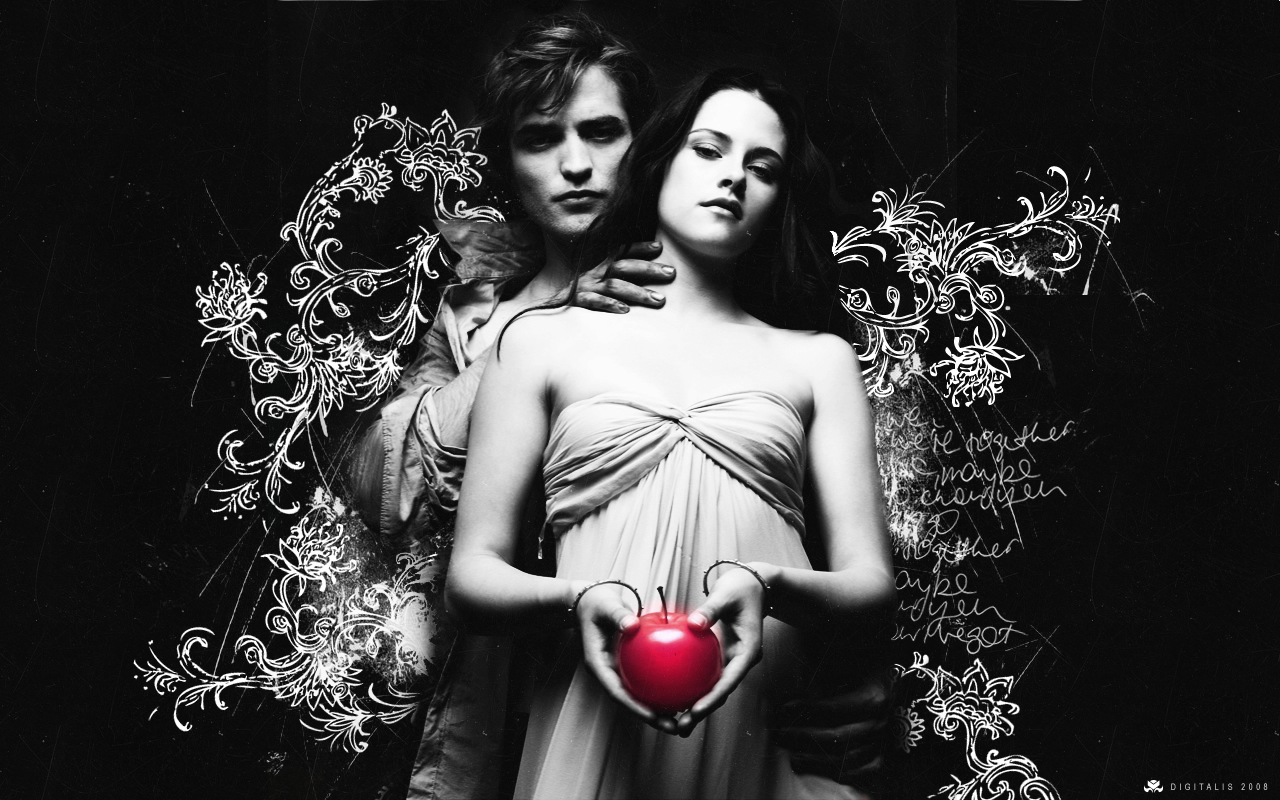
Oh, and what’s with the Twilight? Well, they’re series of books – so, Twilight. The main character is a HYW – Twilight (though I’ll say, dude, Bella turned really wishy washy and consumed with Edward, and ew?). Focus on the dude HYW is in love with – Twilight. Easy reading that is a nice break for your brain – Twilight. Obsessive following of readers – Twilight. All these things about Twilight are also part and parcel for the Amish & Pioneer series of books.

Next time you’re looking for some good reading that doesn’t require much brain activity but is fun and culturally interesting, check out these authors:

#PioneerTwilight: Janette Oke, Tracie Peterson, Lauraine Snelling

#AmishTwilight: Cindy Woodsmall, Marta Perry, Beth Wiseman, Wanda Brunstetter

And y’all, there are TONS more. Just ask your librarian.

Wednesday, August 18, 2010

Probably taking things too seriously


Another Twilight entry, but more about the message it sends to young readers. Get ready for your heads to explode with “OMG ASHLEY IT’S JUST A BOOK” (kind of like when I criticize movies because “that wouldn’t happen in real life”).

I added a few people on Goodreads and one commented on the Twilight series – that she liked it but it rankled her feminist self and also concerned her as a domestic violence advocate.

There are definitely some things in the books that bother me, mainly because there are gads of teenage girls reading them. And yes, if your teenager is getting all of their relationship advice and modeling from a book, there’s a problem. But you can’t underestimate the power of fairy tales shaping our expectations. How many young girls have been raised seeing their parents relationships, compared to what they see in movies and books and think “XYZ is how relationships should work”, while XYZ is completely off the mark?

Here are some things I dislike about the series:

• Edward and Bella’s obsessive, all-consuming relationship is shown as the way “real” and “mature” relationships are and should be. The other teen romances are treated trivially. Bella’s parents’ relationships (with each other and new significant others or lack thereof) are shown in an immature light – her Mom rushes in without thinking and her Dad is emotionally stunted. 2 teenagers are seen as having cornered the market on the way REAL love should be.

• The other relationships that are given any credibility are all “soulmate”, “made-for-each-other”, “I have no option other than to love you forever” things, among the vampires and the werewolves. Theirs seems to be an instinctual love and it’s not based on compatability or values. No credence seems to be given to people learning about each other, committing and then choosing to love one another when times are rough and the fireworks have gone out. Sure, their characters love each other through tough times but it’s always because they have no choice in the matter.

• Bella starts off as an independent person who craves time alone. After falling in love with Edward, she can’t bear to be alone. The guy is with her at school. After school. All night long. It’s literally said in the book that the only time they’re apart is the couple of hours when he leaves, before her dad goes to bed. Then he sneaks back in. So they’re together 20-22 hours a day and she can’t handle those 2-4 hours when he’s not with her?

• WHY they actually love each other has nothing to do with their personalities, beliefs, talents, goals . . . it’s just instinctual, physical . . . it’s destiny. Ok, whether you believe in that sort of thing is beside the point – even if destiny is what drew them together, shouldn’t we see WHY destiny drew them together? Shouldn’t it turn out that their personalities complement each other or that they both have a passion for something? We could assume that these things are the case but they’re rarely implied or explicitly said. Even when they talk about loving each other, there is no WHY. It’s just “I could never exist without loving you.” Ok . . . why?

• Edward – and Jacob – and Bella’s Dad . . . all control the CRAP out of her. Especially Edward! Sure, it’s because she’s hunted by everyone and their dog, but still – as long as there’s a good reason, it’s ok to order your girlfriend around, kidnap her, completely defy her parent’s rules and boundaries?

• Bella sees nothing outstanding or special about herself. And no one else tells her otherwise. Sure, people like and love her. But um, what are Bella’s talents? What are her interests? What does she want to be when she grows up? Here’s what we know: Edward thinks she’s beautiful. Bella is clumsy and seems to draw danger. She was kinda sorta into music and literature but gave it up when Edward hurt her/when she’s with Edward (which is all day, every day). She got into extreme sports and stuff but that was just so she could hear Edward’s voice in her head. She thinks college is pointless, she wants to become a vampire so she won’t be physically older than Edward all their lives.

Don’t get me wrong – I still think the books are fun, though I still have my complaint about too much filler, not enough of the fluffy good stuff (I’m doing a lot of skimming). But these are some things I really don’t like about the way relationships are framed in these books.

Monday, August 16, 2010

My herd instinct is in full effect

There’s a book I’ve been meaning to read, considering I’ve been in a “lighter = better” reading mood lately. I put it on hold at my library since it was checked out, and was able to get it today. Started reading it and OH YEAH, OH YEAH. Me likey.

When I was in high school, I used to write “stories” and bring them for my friends to read. In particular, a couple girls in my Spanish class – one who was on pom with me and one who later got pregnant and I threw a baby shower for her AND she was prom queen – loved what I wrote and would always ask, “do you have more story?” I’d write a little bit at a time and bring in new sections every day or two. These were always teen romances. The truth is I’ve had these stories going in my head ever since then and the characters have matured as I have, though I occasionally dip back into my youth and imagine characters who are young, unmarried, without kids. I love romances (stories). Don’t get me wrong, I love all kinds of other movies and books, but if you throw in romance, it seems to make things EVEN BETTER.

Anyway, I’m totally loving the book I checked out today and am glad there’s a Bears game on right now to distract Vincent, so I can sit quietly, listen to Fleet Foxes, and read . . . Twilight.


;)


I wrote that Saturday evening and was so very happy to be waiting at the library doors on Sunday as they opened, so I could run in and track down New Moon and Eclipse. The last one (I forget the name, the one w/the chess piece on the front) is all checked out but they have it at another nearby branch. Finished Twilight Sunday, began New Moon and I'm almost done. Tonight will go to the branch and get the last one so that tomorrow or Tuesday when I finish Eclipse, I'll be ready.

Oh yeah, it's fun. :) As I was reading Twilight, I kept thinking, Who in their right mind could say, "Team Jacob?!?!" but now that I'm almost done with New Moon and things have developed between Bella and Jacob and Edward is being such a "but I don't want to hurt you" pansy, I can understand it. But I'm still Team Edward. Sorry. I also have been all "OMG JUST MAKE HER A VAMPIRE ALREADY" but I just read the part in New Moon where they were in Italy and saw the group of tourists led to their deaths, and the lady was scared and praying on her rosary and stuff. I mean, if Bella became a vampire we assume she'd stay with Edward and the Cullens, but what if she was really different and decided she wanted people? That would ruin everything. And sure, how would she have a real relationship with her parents again? And Jacob - she and Jacob would be enemies, even if there was a treaty. Also - if she was a vampire (and this is something I've been thinking all along), wouldn't she lose her smell? Would Edward really want her the same as when she was human? What if she became immortal and he was like, "Yeah . . . you just don't do it for me anymore. My bad." ???

As with Harry Potter and LOST and all things I come to late in the game, I'm sure those of you who are through it all are shaking your heads at my silly guesses. Oh well. It's fun!

Oh, and my friend Robin thought the guy from the Vampire Diaries wo
uld have been a much better Edward. I did try to imagine him with that face instead of Robert Pattinson's - and although I do think that the Vampire Diaries guy is more "perfect" looking, he's just not big enough for me to really believe him as Edward. AND I think Robert Pattinson gets "sad and tortured" better than Vampire Eiaries guy. Just Sayin.

Vampire Diaries guy


Robert Pattinson
Enough with the wishy-washy, Edward.

Friday, June 25, 2010

Have any of you heard of the Value Tales books? I learned to read on these!

I had a large set of them, they're great! They feature an historical figure and some sort of value and tell a story of how that character learned the meaning & importance of that value, set in a short story of something real they did.


For example in the Value of Believing in Yourself, you learn about how Louis Pasteur (best know for his milk-pasteurization process) developed the Rabies vaccine even though people said it couldn't be done.

In the Value of Helping, we learn about Harriet Tubman and the way she helped slaves find their way to freedom via the Underground Railroad.

There are 24 books in the set, I believe, and you can order them individually or as a set. Great character lessons for kids as well as history lessons.


Kindness, Respect, Creativity, Fairness, Honesty, Humor, Imagination -- just a handful of the topics covered in this series. Historical figures like Madame Curie, Helen Keller, Confucious, Jackie Robinson, The Wright Brothers, Sacajewa, Abraham Lincoln, Beethoven . . .


Saturday, April 24, 2010

Books for kids

I was just talking to Jenn about this . . .


Remember in school when the teacher would pass out the book order sheets, that listed all kinds of books and activities/materials, at discounted prices? We'd take the sheets home, mark them up with Xs or circles (like above) and hopefully our parent would send a check with us to school so we could order books.

The day the book orders were delivered to the classroom was always great. It would be weeks after the orders had been placed, and I don't know about anyone else, but I'd always forgotten about the orders. Our teacher usually announced that the books had arrived near the end of the day, because no one could concentrate on class after that. It was like Christmas or a birthday when the book orders arrived - maybe even better because it's such a surprise. I would always have finished at least one of my books the first evening before bedtime.

Those book orders are a really special memory of mine.


But what about the kids whose parents could or didn't ever order books for their kids? How did they feel when the book orders arrived, the class went crazy, and they sat there knowing they woudln't have any books passed to them? I know we don't order books for our kids every time they bring home an order form, but we do at least half of the time. Most of the decision for us has to do with whether or not they're doing a good job taking care of their things at the time. If they're being responsible, I'll get them books. If not, I tell them they're going to have to wait until next time, and show me in the meantime that they're going to do a better job of taking care of their things.

It's these seemingly little things that can really make an impact on a kid for the good or the bad. I know as an adult, I cringe when my more well-off peers and co-workers ask why we only drive one car, or why we haven't bought a house yet. There are a lot of "why don't you just dip into your savings?" and "why don't you just use your credit card?" sort of questions thrown around - and I'm sure these people mean no harm, but still it puts me in an awkward position - do I explain our financial situation? Do I need to - is it any of their business? What if our decisions aren't based on lack of money but a concious decision to live a more simple lifestyle? Do I have to explain that?

So back to the kid - how does the kid in class feel when his/her classmates say, "where are your books?" and "why didn't your parents order any for you?"

I wonder how many teachers have bought books for kids whose parents couldn't or didn't?

I think the next time we order books this way, I'm going to send along a little extra money and ask the teacher to get a book for a couple kids whose parents didn't order them anything. I guess some parents might balk at this (pride) but maybe the teacher could just tell the kid that the book company accidentally sent some extras.

Monday, April 19, 2010

DO NOT FAIL YOUR SPECIES

Remember Little Golden Books? I had one of their classics, “My Little Golden Book About God” which was illustrated by the famous Eloise Wilkin.

I remember the images in this book so vividly – I came across it in a store recently and the illustrations took my breath away. They’re pretty, sure, but it was more about being taken back to my childhood. Here are some great images from the book. You can find it all over.

In my attempt to find images to post of this book, I ran across a spoof someone did where the kids in the book are all aliens, ready to take over the human race. It’s pretty funny, and then creepy (those kids always did have freaky eyes!), but nevertheless I just wanted a way to post the images, so here . . . drumroll . . . My Little Golden Book About Zogg!

zogg_1 zogg_2 zogg_3 zogg_4 zogg_5 zogg_6 zogg_7 zogg_8 zogg_9 zogg_10 zogg_11 zogg_12 zogg_13 zogg_14 zogg_15 zogg_16 zogg_17 zogg_18 zogg_19 zogg_20

Thursday, February 18, 2010

Excited to read The Hole In Our Gospel

The facebook status update of a friend of mine jumped out at me this morning. It said:

"For I was hungry, while you had all you needed. I was thirsty, but you drank bottled water. I was a stranger, and you wanted me deported. I needed clothes, but you needed more clothes. I was sick, and you pointed out the behaviors that led to my sickness. I was in prison, and you said I was getting what I deserved." -......Richard Stearns, The Hole in Our Gospel

This is right up my alley. Of course, I had to find out who this Stearns guy is. Here's what I found out (the following text is taken from a book review from blogcritics.org, you can find it here).


You know how sometimes vanilla people can go all salsa on us? They’re bland and ordinary until they experience a pivotal event like a spouse being killed by a drunk driver or a bullied child committing suicide. Suddenly they turn hot and piquant. They’ve seen life from a different perspective and emerged with a new mission — to stamp out drunk driving or crusade against bullying. That’s the picture I have of Richard Stearns, author of The Hole In Our Gospel.


As an executive at Gillette, then Parker Brothers Games and finally CEO of the Lenox table and giftware company, Stearns’ life was tasty American vanilla all the way. Then a set of circumstances led him to World Vision. The change in him began when he listened to the story of an orphaned boy in Rakai, Uganda, on his first World Vision assignment. It continued in encounter after encounter with the poor in over a million miles of travel to all the inhabited continents of the globe.


In The Hole In Our Gospel, Stearns presents a compelling challenge to westerners, especially the church, to forsake their myopic pursuit of wealth, comfort, and self-realization and to fulfill the uncomfortable command of Jesus to care for the poor. As Stearns says in the book’s introduction, “…being a Christian or follower of Jesus Christ requires much more than just having a personal and transforming relationship with God. It also entails a public and transforming relationship with the world.”


The book’s 26 chapters are divided into five sections in which Stearns explores a variety of topics. He talks about the gospel and what it is. He describes his own journey of faith and how he came to head World Vision. He names the many challenges that the poor of the world face (disease, poverty, lack of water, hunger, political turmoil) and drills down with details, statistics and stories that bring facts to life. He exposes the self-absorbed tendencies of people in developed societies and challenges especially the church to remember the poor. As he says in the beginning of the section that examines the western church’s response to poverty around the world:
“Where was the church of Jesus Christ? That was the question I cried out that first day in Rakai, Uganda, after seeing the suffering of orphans living in child-headed households. That question has troubled me ever since. Where indeed was the Church? If the world as I have described it truly is wracked with poverty, injustice, and suffering, and God has clearly called us to embrace the whole gospel – characterized by love for our fellow man, a commitment to justice and proclamation of the good news of His salvation to all people – then we must next look at His Church and ask whether it is being faithful in its responsibility to bring the whole gospel to the whole world.”


Stearns is well qualified to meddle in this way. As a former member of the lethargic Christian majority, he understands the mindset. But now, as the face of World Vision, he has seen with his own eyes the grim reality of how the rest of the world lives. And so we can’t shove him aside as someone who doesn’t understand us or doesn’t know what he’s talking about.


Stearns’ voice is warm, his writing style interesting and easy to understand. He wields a variety of persuasive tools including statistics, Bible exposition, and stories. Finally, like a good salesman, he goes in for the close, challenging each reader to personal action.

The hardcover edition appears sturdy enough to withstand the hours of handling it will receive if the book is used with the Study Guide section at the back. The end-matter also includes the book’s website URL where visitors can share stories, join a forum, find church resources, view videos and more. The book’s last pages contain a list of notes and references footnoted in the text.


This book reminds me of the Ronald Sider’s classic Rich Christians in an Age of Hunger. Like that book, you won’t be able to get through The Hole In Our Gospel and remain unchanged. So beware. Reading this book may just tip your dosimeter into the radioactive zone or change your status from sleeper cell to activated. You yourself may turn from vanilla to salsa.
Related Posts Plugin for WordPress, Blogger...