Showing posts with label christianity. Show all posts

Friday, August 10, 2012

Turning From My Faith: My Future


I’ve detailed some of my experiences as a Christian, and what it was like telling my loved ones that I was turning from the faith. So, what now? What has changed for me, and what will I believe in the future?

In some ways, I feel free. I feel free to have relationships with all kinds of people. I wasn't taught that I shouldn't have relationships with non-believers, but that people who weren’t truly devoted to Christ weren’t the best influences because they would draw my focus from Christ and then it would be easier for me to give in to sin. You know – if you start hanging out with the office gossip, you’re probably going to end up gossiping with them sooner or later. Well, now I hang out with the office gossip. And the office saint. And all the people in between.

I feel free to do things that I have been taught are sinful. Getting drunk. Lustful thoughts. Being selfish. Generally, not using the Bible as my guide through life. It’s not like I want to (or do) go out, get hammered, go to bed with strangers and ignore everyone all day in an effort to only fulfill my personal desires. I don't have tickets to Hedonism yet, dang! It’s just that before, those things were to be avoided completely and any indulgence was considered sinful. Now, I indulge a little. It’s not like I’ve lost all common sense – those prohibitions made sense to me because of how they impacted us practically. Being drunk all the time still has the same practical problems as it did when I was Christian, it just doesn’t also carry a set of spiritual consequences.

I feel free to explore the side of myself that I kept quiet, locked up, pushed down. I don’t have a great explanation for what this side looks like or is all about . . . just that I feel free to be completely ME without censure. Of course I still consider how my actions impact others, how they influence my future self. I do not, however, consider what God thinks of my actions. I feel free to explore friendships with people who live this way.

I feel free to admit things I didn’t want to admit, or believed couldn’t be possible, because those things didn’t fit into the worldview and set of beliefs I had chosen. An example – that a woman can have an abortion and feel loss, yes, but also believe it was the best thing for her, and not be haunted by it. For the record, I was never a You Whores Need To Stop Using Abortion As Birth Control type of pro-lifer, I wasn’t even really a Think Of The Millions Of Lives Lost type of pro-lifer. I was a Look At How It Damages The Women And Men And Families Left Behind After The Procedure And Why Can’t You See That This Is A Hugely Profitable Industry That Doesn’t Really Care About You type of pro-lifer. And I do still believe much of that. I just have a broader understanding of other after-the-procedure experiences, and believe that it should be legal. The legality thing is a huge change for me. I used to be a No Matter What, It’s Never Ok, Ever person. Not anymore.

I also feel loss. 

I feel the loss of certainty – who or what created us, why we’re here, where we’ll end up after death. I feel the loss of the Christian community. I feel the loss of friendships which have drifted or become shallow – at least in part because of this change. There were things I didn’t talk to my non-Christian friends about because I only wanted to discuss it with someone who would respond with a Christian point of view. I may be left out of those conversations, now, when others use that same reasoning. I feel the loss of a guidebook for life. I feel sadness when a friend who used to lean on me as the only Christian friend in her life still wants to lean on me for that. I don’t know how to tell her that this has changed.

I feel the loss of discussing theology – which still fascinates me. I feel the loss of being able to speak about problems within the Church. I have the same concerns about the Church today as I did when I was devout but now I feel like it’s not my place to discuss them any longer. Like I have to be a member of the club to discuss the club, even though leaving the club didn’t magically make me ignorant to how the club works.

There are parts of myself that have become softer and more inviting. There are parts that have become harsher and less forgiving. I miss the meditative aspects of prayer. I miss the beauty and complexity and comfort of scripture. I miss hymns that remind me of my childhood, hymns that are full of theology (modern Christian musicians you need to pick up your game like whoa in this respect, seriously). I miss having constant reminders to better myself (I think most of us could use some reminders), to focus on grace and forgiveness and mercy and love. I miss having a firm set of standards. Even when I was trying to figure out exactly what I believed, which interpretation of those standards seemed correct – there was still a set. Now I’m just out here, trying to untangle what I was taught, from what I really believe, from what is being told to me by my environment. Probably one of the strongest beliefs I held as a Christian was that our human understanding of the world is flawed and this is why we rely on God. Now I’m on my own and turning off the belief that my personal understanding and logic may not be enough is very hard.

Yet – even with all those things that make this tough – it’s where I am. I can’t go back and pretend to believe something that doesn’t seem believable anymore. That would be tough AND insincere.

I never, ever thought I would turn away from the Christian faith. Because it was such an impossibility to me – yet I did it – I think it’s possible that one day I will return. I don’t feel like I ever will, but since the “impossible” has happened once, why not again? And – let’s say that Christianity really *is* the truth, and the spiritual concepts of “once saved, always saved” and “once the Holy Spirit inhabits a person (i.e. once they’re saved), it never leaves them” are true. Either I was a great fake, even to myself, or I really did get saved, I really do have the Holy Spirit within me, and that can’t be taken away. So maybe that Holy Spirit will push me to return. Or maybe I have committed the unforgiveable sin of turning away, and maybe the Holy Spirit left me when I made that choice. I don’t know. I don’t know what my future has in store.

I think I will probably look for some positive things to meditate on – Biblical passages, meditations and scripture from other religions. Maybe some self-help stuff if I can find something that isn’t too cheesy. I have no intention of joining another religion. Any religion I choose will be problematic in the same way – I will have to depend on man’s interpretation of right and wrong, of their concept of God, on their fallible take on perfection. No thank you. If I could handle that, I’d just stay Christian.

There it is. I haven’t talked about all the things that have changed, or all the areas where I have doubt, but I think I said enough. I’ve struggled in finding accounts of people who were wholeheartedly Christian, very devout, and turned away. And when I find them, they usually have a huge axe to grind and went through terrible situations which caused them to lose faith. I don’t really identify with that. I don’t have hard feelings against the Church or Christians, at least not any that I didn’t have when I was a Christian myself. I just don’t believe it any longer. I hope that anyone reading this feels encouraged to discuss their own story – with me, with someone. It’s hard feeling like you have to hide this stuff.

The End . . . For Now.

Thursday, August 9, 2012

Turning From My Faith: The Fallout


In an earlier post in this series, I mentioned a group of friends I made through Livejournal, an online journaling/blogging site.  Over the years there I had many friends but a core group of 10-15 women that I became very close to. Most of them are Christian and this connection between us was strong. I leaned on them, they leaned on me. We encouraged each other, prayed for each other, discussed spiritual concepts, things going on in our families, our churches, at work, personal struggles.

A few years ago we all began spending less time online at Livejournal. Facebook took over (as did Twitter for some of us) or we just didn’t hang out online anywhere the way we used to. People were having kids, getting married, changing jobs, moving to new cities and states. Life got in the way of being online, you know? So we all drifted a bit. It wasn’t as though we liked each other less – we just didn’t spend as much “time” with each other. Most of us became friends on Facebook and ended up posting short things about our lives rather than writing long Livejournal entries.

Probably because of this space we’d all given each other, it wasn’t as obvious to others that I had been drifting with my spiritual beliefs. I wasn’t writing about it in Livejournal and I certainly wasn’t talking about it on Facebook. A few friends might have wondered, but my guess is they assumed I was just going through a period of stagnation, which happens to everyone of faith.

When I finally did make the announcement that I didn’t think I believed in Christianity any longer, that I wasn’t sure where this was leading – it was a big shock. It was very painful and concerning for my friends, and I understand why. Our Christian beliefs tell us that those without salvation will spend eternity separated from God. That’s how I always pictured it, at least. I never worried too much about burning in the fires of hell as I believed that imagery was used to scare people into belief, and that’s not what my faith was about. My faith was about love and service, grace and forgiveness, mercy and sacrifice. Not fear and threat of torment. For those who never believed in heaven or hell, it may be difficult to understand the concern of having a loved one spend eternity apart from God.

The way I was taught, everything good comes from God. Nothing impure, evil, wrong, bad, negative can reside in his presence – his presence is so holy that it cannot tolerate anything unholy. So spending eternity with God means spending an eternity in the presence of everything good. To be separated from God means to be separated from ANYTHING good. Hope, love, comfort, happiness, success, forgiveness, mercy, truth – none of that resides in the space that is separated from God. This is what’s scary about not being saved – never having any of those wonderful things around you, in your consciousness, in your life, in your existence – forever. Never even having hope that one day it might change.

It broke my heart all the time, thinking of people I loved who would never know this goodness, thinking of them spending eternity without hope. Separated from God, separated from me. This is what drives many Christians to spread the “good news”. Not concern over how many people they “led to the Lord”, like notches on a belt – concern over what that person, possibly a stranger, would endure for eternity if separated from God. A love for everyone, or at least an attempt to have love for everyone, and wanting the very best for them. Forever.

So yeah, I absolutely understand why it hurt my friends, why it shocked them, why they were worried.

Having said that, it was painful to hear them say they felt I needed to get back in church so I could be influenced by other Christians, by the Word. It was painful to hear them worry about how this would impact our relationship. It was painful to know that they thought (and hoped) this was just a stage of doubt I was experiencing.

I don’t think there was any way it could not be painful, though. No one was cruel, no one was thoughtless. It’s understandable that they were surprised and hurt and worried. I suppose if they had all said, “No big deal, Ashley. I have no questions or concerns.” I would have been the surprised one.

I haven’t told many other people. Mostly those who I’m not very close to, people who didn’t know me that way. A few Christians I know as acquaintances have offered suggestions of scripture or books to read. The thing is, I’m not a brand new Christian. I studied theology and ecclesiology for years, albeit informally. I used to be the person giving suggestions to others who were experiencing doubt. I know it’s an issue of pride with me, but it does seriously bug me when people assume I just haven’t read the right Bible verse, or heard the right sermon, or considered XYZ spiritual concept. I have. I have. All the months leading up to my “coming out”, and all the months since, I have gone over this in my head, I’ve talked about it with others. I’ve read the Bible. I’ve prayed. I’ve looked up articles and books on doubt. I KNOW ALL THE ANSWERS THAT WE ON EARTH HAVE TO OFFER AND THEY ARE STILL INSUFFICIENT TO ME.

I’ve met a few people who have similarly been devout and turned away from the faith, but most of the people I know who have turned away weren’t very devout in the first place. I’m scared for certain family members to find out – some because I know they’ll go through the same hurt and worry as my friends, some because I know they will never stop preaching to me once they find out, and they will blame any issues in my life on my lack of faith.

Telling people of faith that you have given up the faith is not easy.

Tomorrow: My Future In Faith

Wednesday, August 8, 2012

Turning From My Faith: Interracial Marriage, Homosexuality and Losing Trust

In my last couple of posts I’ve explained how my perspective on homosexuality has changed. Today I’ll explain the role it had in my decision to turn from my faith.

For a couple thousand years, the Christian Church taught that marriage between different races was sinful and that the offspring from those marriages would be ineligible for salvation (heaven) for a number of generations (I think seven was the magical “Ok, now you’ve probably visibly breeded out any traces of that other offending race by now” number, but I could be wrong). This belief, though not mainstream any longer, is still taught in some churches in the U.S. I have no idea what is taught on this topic elsewhere.

These teachings (and things like the slave trade) influenced those who were in power when the U.S. was being built, and for the majority of our nation’s existence, marriage between a White person and a Person of Color (POC) was illegal. Less than 50 years ago, the Supreme Court determined that these sort of laws were unconstitutional. Even so, as late as the year 2000, there were states in the U.S. with anti-miscegenation laws in effect.

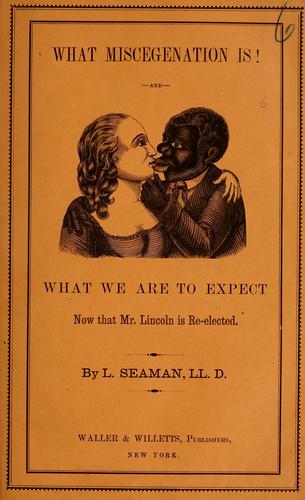
It seems using trusted religious beliefs to scare religious folk/vilify your political opponent is nothing new:


During the years when I was a devout Christian with conservative beliefs about homosexuality, I disliked comparisons of race and sexual orientation. I believed that people weren’t born homosexual, but they were born (insert non-White race) and thus it wasn’t fair to compare the two marriage/discrimination issues. Even if there were homosexuals who didn’t choose that orientation, they could still hide it and blend in if they really wanted to – non-Whites couldn’t. Of course I acknowledged that this would be a miserable existence, being in the closet, but I also believed that if God said we shouldn’t do something, we shouldn’t do it. Simple. Easy, no – simple, yes.

I have done a lot of thinking about how we (religious folk) change our religious beliefs based on the culture we live in. One of the foundational ideas in Christianity is that God is unchanging and that what Jesus taught 2,000 years ago applies today. If you’re from a Christian culture of Biblical inerrancy (believing that the entire Bible, while better understood through context, is true and relevant to our lives today) the way I was, you aren’t supposed to just rely on the New Testament. Jesus said he didn’t come to destroy the Law (i.e. the more hardcore rules we see in th Old Testament/Torah), rather, he came to fulfill it. I.E. you can't throw out Deuteronomy no matter how much you might want to.

There are arguments that Jesus’ teachings don’t contradict the problematic Old Testament rules about marriage and slavery; that Jesus didn’t come to tangle with our earthly laws or politicians (this is often in response to questions about why Jesus spoke about slavery without condemning it - wouldn't it have been so much easier if he had?). There are arguments about homosexuality and marriage that are based on whether Jesus ever talked about the two topics (he didn’t say anything about homosexuality, he did talk about marriage, divorce and adultery).

At any rate, the Church has been against miscenegation for a long time and they used the Bible for backing. This faith that is supposed to be resolute, unchanging and our guide through life – well, the faith got it wrong. Really, really wrong. At least, that’s what we believe today. This certainly isn’t the first time this has happened. From priests marrying or not marrying, to forced conversion, to divorce and even whether you can receive forgiveness for sins through prayer or financial donations – the Church has changed it’s mind on a lot of stuff, big stuff. Stuff that the Church claimed was From God So We Must Believe In It.

Centuries later, we can see how wrong the Chuch was on those things. Now we know the impact politics, power, money, wars, cultural traditions, etc. had on the Unchanging Word of God. But at the time, things seemed very much right to the people who were there. Things seemed to have Biblical backing. Things were taught by the clergy, who were God’s representatives, and they should know. And those teachings made sense to the people.

Here’s my point: We keep forgetting that - to use a Biblical phrase - there is nothing new under the sun. Why do we insist on such arrogance, on saying, "I know that every single generation and church before me has gotten some major thing wrong, but I'm pretty sure that this time, finally, WE GOT IT."?! I've been told (and I used to argue) that we can't blame God for man's misunderstandings. But - the only thing we have to rely on is man. It is man who we follow as clergy. It is man who decided what was written down in scripture. It is man who decided which parts of scripture are really from God and which parts aren't. It is man who has taught millions of people that XYZ was a Biblical, Godly thing . . . and it all turned out to be a lie or a mistake or a problem with translation. God isn't going to come down and speak to me himself, so if I am going to learn about God through organized religion, it is going to be through the words and actions of men.

I do not trust the Church’s interpretation of scripture. I do not trust the way the Church (through internal and external pressure) has manipulated what we now have as the Bible. I do not trust that what we have today as a blueprint is what God wanted us to have, if God really did give it to us. I do not trust the Church that only just (and still not completely) gave up teaching that my husband and I should not be married. That our children are doomed to hell for generations. I do not trust the Church that continues to teach these sort of things about homosexuals. I believe in a century or two our descendents will think we are as ridiculous as I think people were, only 50 years ago, as they picketed the Loving vs. Virginia trial.

These people were sure they were full of the light of Christ and only saying the hard, unpopular things that needed to be said to protect our society and to be in line with God's Word.

And really, that is the root of it all. I can’t trust my faith, my Church, my Bible, my clergy, my fellow Christians to have a good handle of the truth, the real right and wrong of this world. Homosexuality isn’t the only issue here – my lack of trust is unfortunately spread across the whole faith – but my change in perception, my growth in relationships with homosexuals has absolutely impacted my ability to trust my faith. I know there are people who are able to reconcile what the Bible says about homosexuality with their personal belief that homosexuality isn’t wrong or sinful. I don’t know how to do that. I’m not very good at ignoring the uncomfortable parts of the Bible. In the past, when I came across them, I studied hard to understand what they were about (and the Church has a good explanation for almost everything) and when I couldn't find a satisfactory answer, well, you know . . . God's ways aren't our ways and his thoughts aren't our thoughts. This is the Biblical response when there is just no good answer for what God has purportedly done.

If I can’t trust the homosexuality part, I can’t trust the God part, the Holy Spirit part, the Jesus part. I can’t trust the salvation part. That's where I am.


Tomorrow: The Fallout

Tuesday, August 7, 2012

Turning From My Faith: Homosexuality, Normalized


During my most devout years as a young adult – married, with young kids – I was active in LiveJournal which is a journaling/blogging community. I had a personal journal that “friends” could read & comment on (basically a password-protected blog) and I was also active in some LJ communities that were like blogs where everyone could post entries along a specific topic. For a few years, I was very active in the main, largest Christianity community there. I became friends with all types of Christians as well as some non-Christians, through that community.

One of my friends was a man I’m going to call Daniel. He had a gentle personality and would write long entries in the community about the love of God, questions he had. As time went on, he got more and more unorthodox in his entries and began referring to God as a woman or as gender neutral. His theology was clearly not in line with the theology of those of us in the “biblical inerrancy” club. I was “friends” with Daniel via our personal journals and in his entries he slowly began to reveal that he was transgender and working toward a lifestyle transition from man to woman. He’d been married for something like 20 years, had children that were nearly grown. The changes he made were devastating to his marriage, family and career. He began referring to himself with a woman’s name – I’ll use Maria.

There was a lot of division in our online Christianity community that centered around Daniel and his theology, his choices. He wasn’t the only person that promoted unorthodox beliefs in the community, but he seemed to be a magnet for those of us who believed otherwise. It was incredibly frustrating to see him say things that we considered heretical, and to see others lap it up. We felt he was leading those who were immature in their faith in the wrong direction. Additionally, when those on my side of the fence would post something in the community, we’d often have to go through a ton of debate about whether scripture could be trusted before we could get to the topic of the original post. After a while, a group of us decided to form our own community that laid the ground rules: “You gotta believe what we believe, foundationally at least, if you want to participate. No more arguing over the authority of scripture – people here believe in it, now let’s get down to some real issues.” We didn’t abandon the other community (well, not all of us) but many of us did spend less time there . . . and less time with Daniel. Daniel knew not to ask to join our special club.

I had a lot of frustration with Daniel about the way he interacted in the main community, at times it seemed he was intentionally poking at us, stirring up contention. I think that some of that frustration bled into my views of what he was going through with his gender issues. At some point, we stopped being “friends”. I remember trying to find out what was going on with him later, wondering if he was ok. I thought about how lonely and scared he was. I thought about everything that he gave up. He lived in a small, conservative community. He was willing to give up his reputation, his marriage, his children.

As the years have passed, I’ve thought about Daniel/Maria and I regret how unloving I was. How unforgiving and hard-hearted I was. I regret that I decided it was too difficult to watch someone being SO UNHOLY that I felt I had to cut off my relationship with them.

I now live and work in a much more liberal city. I work in a very liberal graduate school where Christians, especially those with ANY conservative beliefs, are the minority. I’ve had the opportunity to be exposed to so many people across the LGBT spectrum. I’ve attended “difficult dialogues” where we discuss various issues related to those who identify as LGBT. I’ve listened to faculty and guest speakers talk about their clinical work with LGBT clients. I know of some of the non-profit organizations in Chicago that work with the LGBT community. I have regular, normal friendships with quite a few people who are LGBT. My online world has also expanded greatly in this respect. I’m in a degree program at a small, private, liberal arts school founded by a service & social justice-oriented Christian denomination. Through class, I’ve become friends with a married lesbian who is active in her church, a straight woman who advocates on behalf of LGBT individuals for reconciliation with the church and a gay man who left the church without ever looking back because of how he was mistreated. I know gay and lesbian pastors and ministers. I know of many Christian congregations that are “open and affirming.” I have gay friends in real life and online, who talk about their experiences and also talk about the same things as me: family, jobs, kids, celebrity crushes, health, etc.

Homosexuality has been normalized for me. For the first time in my life, when I meet a person who identifies as LGBT, that isn’t the biggest thing that stands out to me. It is a part of them, but who they are as a person is more evident. That wasn’t the case before. Even when I was friends with gay people in the past, we didn't talk about that part of their life much. I have to wonder - were they afraid to bring it up because they knew of my Christian beliefs?

Since moving to Chicago and becoming more exposed to homosexuals in all walks of life, I’ve been more honest about my beliefs and my struggles to reconcile how I feel vs. what I’ve been taught to believe. For the longest time I have advocated getting to know people who are unlike you in some way because separation is what allows you to see them as less human, as deserving of poor treatment. I mostly talk about this in terms of race, though. I've had to admit that my lack of relationships with homosexuals, especially as an adult, has greatly impacted my compassion, empathy and overall understanding of what they have experienced.

And you know what? Everyone has been so kind to me. The people who have spent however many years being judged treated me with care, even though I very likely offended them and certainly represented people who have hurt them.

Next: Racism, interracial marriage and homosexuality.

Friday, August 3, 2012

Turning From My Faith: My Adulthood in Faith


Yesterday I wrote about my background in Christianity. Today, let me tell you what that actually looked like during my adult years.

I attended church regularly, went to Bible studies, was part of the dance ministry and worship team (singers). I read books, blogs and articles on religion. I was very active in online religious communities. Via email and Livejournal, I developed deep and meaningful friendships with a small group of women and a slightly larger group of men and women – we all shared faith.

I was a mixture of a fundamentalist evangelical, and a very liberal hippie. The fundamentalist part was that I considered the Bible to be the inerrant Word of God. I did not believe it should be read literally, without context, though. For example – my take on the 6-days creation story was that yes, God started it all. He created it all. But did it only take 6 24-hour days, the way we measure days today? Most likely, no. There are a variety of translations of the language used in the creation story that indicate the word for “days” could have meant much longer periods of time, and if you follow the creation story you’ll see that the sun and moon and earth weren’t even invented in the beginning, so who was measuring these 24 hours? Ultimately, I believed that it wasn’t the sort of thing we should divide over or argue with non-believers over. I believed God made it happen, however it happened. Even if he did it through evolution! *gasp* So – I was the “Every part of the Bible is relevant and beneficial to us today but that doesn’t mean we have to read it without context of history, translation, etc.” type of Christian. I considered this pretty reasonable and I patted myself on the back for having the perfect combination of common sense and respect for scripture.

I believed strongly in the Nicene Creed, a statement of major Christian beliefs. 

For 8-10 years, there were three main areas where I held very conservative beliefs. I am going to write about these in this series, so I’m not going to detail them much now (which kind of freaks me out me as I hate for you to spend days knowing of my old beliefs and not my new ones). I will say that my views on each of these issues has changed – some moderately, some radically.

The first area: homosexuality. The second: abortion. The third: Men are the head of the household, women are to submit.

I did not hate anyone because they were gay, had an abortion, believed in abortion rights, argued with their husband, used birth control, wore pants, etc. I have never cast a vote in relation to marriage or abortion rights. My voting record is almost all Democrat, and in recent years, Green. I have voted for Republicans in local races, mainly where they are the only candidates. In my pro-life stance I was also anti-war and anti-death penalty.

My liberal side came out in social justice. Feeding the poor. Justice for the oppressed. A disgust for the co-opting of our faith by politicians and lobbyists who guilt Christians into voting a certain way and have convinced them that capitalism and ethnocentrism is a tenet of faith.

I focused a lot on personal holiness. To some, this means “following the rules”or “not sinning”. To me, it meant actively dying to my selfish nature in an attempt to be more and more like Christ. It meant offering forgiveness when I wanted to hold a grudge. Praying for those in turmoil. Learning when to share my faith and when to be quiet and just be a friend. Turning over every rock in my life and looking to see what needed to be cleansed and made new. Supporting my church, local and larger communities with my time and money. And yes, I also focused on personal sin. I feel I was lucky to have been raised without a fear of sin, without fear of the torment of hell. I believed that once “saved”, always saved. I believed that being inhabited by the Holy Spirit meant that there was no reason to fear losing my salvation and that from that point on, my life was to be about serving Christ and becoming as much like him as I could. It was not meant to be spent punishing myself or anyone else over sin. Sin was inevitable – repentence and growth were necessary and the goal.

Spiritual matters were mostly matter-of-fact in my eyes. The commandments, mandates or rules God gave us in the Bible were not to kill our fun, they were to protect us and to help us grow as we struggled through hardship. For example, not having sex outside of marriage? This was to protect us from disease and unwanted pregnancy, but it was also to protect us from heartbreak. From those days when you’re driving down the street, a song comes on the radio and suddenly you remember someone you gave yourself to, who totally mistreated you. Like I said – I wasn’t concerned with being “bad” because I’d sinned. I was concerned with the fallout from sin. I saw sin as bad because it was bad FOR US. Of course, you can experience disease, unwanted pregnancy or heartbreak inside a marriage – but it’s hopefully less likely . . . and hopefully you’ll be better equipped to handle those struggles with your partner by your side.

Don’t think, though, that I was skipping down a flower-lined path, holding hands with Jesus, perfect in my ambition for holiness. I never did any of those things above consistently. I went through periods, sometimes long ones, where I wasn’t praying, studying scripture, examining myself, serving others, etc. Additionally, I had my own little set of pet sins that seemed impossible to overcome. One was pride. I was a strong believer that all sin results from focusing on self above God, in any given situation. Putting my desires – right or wrong – ahead of what God wants for me. So there needed to be a daily effort to “die” to myself (a scriptural concept). The funny thing is that you can become prideful in that. I’M really good at sacrifice. I was also prideful in my scholarship. I know scripture and like to study it. I don’t think scripture is boring. I would love to learn Greek and Hebrew. I know what that scripture is saying and what other scripture it’s referencing. And? I was prideful in my strength. I am willing to examine myself to eradicate sin, but YOU are weak and unwilling to do the hard work of admitting you need to change. I am willing to acknkowledge the authority of scripture even if it means I have to support things I don’t understand or agree with, because I can admit I don’t know everything and am subordinate to God but YOU are so self-centered and immature that you won’t acknowledge that you’re not in charge. I mean, can you get any more ironic? Of course, I kept these thoughts to myself (well, mostly).  I might refer to something like that when discussing a problem someone is having, with a mutual friend. It was all done with the best intentions, of course. I say that sarcastically now but the truth is, I did believe that. I was concerned with the struggles others went through, but I also had pride, deep down, that I was strong enough to overcome those struggles.

Monday: Me, Christianity, Homosexuality.

Thursday, August 2, 2012

Turning From My Faith: An Introduction


I have mentioned in other blog posts, and on Twitter, that I am currently in a serious state of disconnection with my faith – Christianity. Mostly I make jokes about not being ready to throw the Baby Jesus out with the bathwater yet . . . it’s easy to make jokes when you don’t know exactly where you stand or where you will stand in the future.

The point of this post was to explain where I stand on a specific issue, in relation to my history as a Christian. It kept getting longer and longer, though, so I think first I need to give an introduction. That’s today’s post.

I was raised in Wichita, Kansas, a conservative city in a conservative state in a conservative region. My parents were moderate liberals, but they operated within a conservative life and lifestyle. They were raised in the Church: strict Lutheran for my German/Czech Dad and small-town/rural Bible-based churches for my Mom, not sure what denomination. My Mom was more devout and definitely more evangelical than my Dad. I spent time in an assortment of churches – Nazarene (a conservative off-shoot of the Methodist church), Lutheran, Church of God (evangelical) and Presbyterian (though this was a youth group that was pretty separate from the rest of the church so I don’t know much about Presbyterian theology). These churches were almost all White. The Church of God had a separate service for the local Korean community. As an adult, I have been a member of a mostly-Black, gigantic United Methodist church (which was effectively Baptist due to the way most members were raised), a tiny, all-Black non-denominational “prosperity gospel” church, (a post for another time!) and I attended a multi-racial Vineyard church, which was my last church.

I didn’t just go to church, I was a believer. I have been devout most of my life, excusing the years in college where I decided to put my faith on hold so I could party without too much guilt. My faith was a very positive and affirming thing for me. I wasn’t raised to believe in God because I feared him or hell. I was raised to love the goodness of God. I am fascinated by theology and have spent a lot of time in biblical study. When I decided to go back to school to finish my bachelor’s degree, I considered degrees related to theology, ministry. I not only enjoyed religious courses in college (both times), I chose to take them as electives while my classmates shuddered at the thought.

For almost all of my married, parenting life (which started at age 21), I have been actively pursuing my faith, a deeper and more meaningful relationship with my God, and the ways I could be a better servant of Christ. My faith, and the relationships with others who shared my faith, sustained me during really difficult times, especially as Vincent and I were trying to figure out how to be married. We made a lot of mistakes and we didn’t end up divorcing because 1) we were too poor and 2) my faith gave me incredible drive and support to stick it out and figure it out. I suppose what I’m trying to say is that my faith was very important to me and it played a large role in much of my life.

Tomorrow: So, what did “my” Christianity look like? What kind of believer was I?

Thursday, February 18, 2010

Excited to read The Hole In Our Gospel

The facebook status update of a friend of mine jumped out at me this morning. It said:

"For I was hungry, while you had all you needed. I was thirsty, but you drank bottled water. I was a stranger, and you wanted me deported. I needed clothes, but you needed more clothes. I was sick, and you pointed out the behaviors that led to my sickness. I was in prison, and you said I was getting what I deserved." -......Richard Stearns, The Hole in Our Gospel

This is right up my alley. Of course, I had to find out who this Stearns guy is. Here's what I found out (the following text is taken from a book review from blogcritics.org, you can find it here).


You know how sometimes vanilla people can go all salsa on us? They’re bland and ordinary until they experience a pivotal event like a spouse being killed by a drunk driver or a bullied child committing suicide. Suddenly they turn hot and piquant. They’ve seen life from a different perspective and emerged with a new mission — to stamp out drunk driving or crusade against bullying. That’s the picture I have of Richard Stearns, author of The Hole In Our Gospel.


As an executive at Gillette, then Parker Brothers Games and finally CEO of the Lenox table and giftware company, Stearns’ life was tasty American vanilla all the way. Then a set of circumstances led him to World Vision. The change in him began when he listened to the story of an orphaned boy in Rakai, Uganda, on his first World Vision assignment. It continued in encounter after encounter with the poor in over a million miles of travel to all the inhabited continents of the globe.


In The Hole In Our Gospel, Stearns presents a compelling challenge to westerners, especially the church, to forsake their myopic pursuit of wealth, comfort, and self-realization and to fulfill the uncomfortable command of Jesus to care for the poor. As Stearns says in the book’s introduction, “…being a Christian or follower of Jesus Christ requires much more than just having a personal and transforming relationship with God. It also entails a public and transforming relationship with the world.”


The book’s 26 chapters are divided into five sections in which Stearns explores a variety of topics. He talks about the gospel and what it is. He describes his own journey of faith and how he came to head World Vision. He names the many challenges that the poor of the world face (disease, poverty, lack of water, hunger, political turmoil) and drills down with details, statistics and stories that bring facts to life. He exposes the self-absorbed tendencies of people in developed societies and challenges especially the church to remember the poor. As he says in the beginning of the section that examines the western church’s response to poverty around the world:
“Where was the church of Jesus Christ? That was the question I cried out that first day in Rakai, Uganda, after seeing the suffering of orphans living in child-headed households. That question has troubled me ever since. Where indeed was the Church? If the world as I have described it truly is wracked with poverty, injustice, and suffering, and God has clearly called us to embrace the whole gospel – characterized by love for our fellow man, a commitment to justice and proclamation of the good news of His salvation to all people – then we must next look at His Church and ask whether it is being faithful in its responsibility to bring the whole gospel to the whole world.”


Stearns is well qualified to meddle in this way. As a former member of the lethargic Christian majority, he understands the mindset. But now, as the face of World Vision, he has seen with his own eyes the grim reality of how the rest of the world lives. And so we can’t shove him aside as someone who doesn’t understand us or doesn’t know what he’s talking about.


Stearns’ voice is warm, his writing style interesting and easy to understand. He wields a variety of persuasive tools including statistics, Bible exposition, and stories. Finally, like a good salesman, he goes in for the close, challenging each reader to personal action.

The hardcover edition appears sturdy enough to withstand the hours of handling it will receive if the book is used with the Study Guide section at the back. The end-matter also includes the book’s website URL where visitors can share stories, join a forum, find church resources, view videos and more. The book’s last pages contain a list of notes and references footnoted in the text.


This book reminds me of the Ronald Sider’s classic Rich Christians in an Age of Hunger. Like that book, you won’t be able to get through The Hole In Our Gospel and remain unchanged. So beware. Reading this book may just tip your dosimeter into the radioactive zone or change your status from sleeper cell to activated. You yourself may turn from vanilla to salsa.

Wednesday, September 9, 2009

The ol' Partisan Poison Dart


I read the Obama school speech transcript. I think it was good. My kid's school didn't show it it: “There are many reasons, including MAP testing, instructional blocks, and the inability to show this with our current technology resources.” It’s not a huge deal to me – there isn’t anything in there that we haven’t already talked to our kids about. However, they like Obama so it will be good to sit with them & watch the speech, it will be exciting for them. I remember as a kid hating to watch stuff with adults talking about adult stuff . . . I’d try to watch presidential addresses but would quickly lose interest. I think it would have been really cool to see him talking right to me on my level.

As a parent, I’m not concerned that he would be trying to indoctrinate my kids. I wasn’t a Bush fan but if there had been a presidential address like this I would have thought nothing of it – I would assume, as I have with Obama, that the speech would be kid & education focused, and I wouldn’t expect there to be any sort of partisan poison dart that would shoot out of the TV and infect my kids and make them become a big, bad (insert political party). If one speech from the president would override everything I’m teaching in my home, then I’m not doing much teaching in my home!

As for the kids who don’t get the teaching at home, I don’t think there was anything but encouragement to work their hardest in the speech. And Obama being able to share stories of how he identified with not having a perfect life growing up will be meaningful to those kids – this is one more reason that I do like Obama even though I disagree with some of his policies – he is a different face, a face that some kids will be able to identify with for the first time. Him mentioning difficult times in his childhood is another way of telling the kids who don’t have much support – try anyway, you can do it. The truth is many of them won’t do it, even with him as an example, because all our problems as a society don’t go away just because we have a Black president. But it’s one barrier broken down – having never seen a Black face in that office. I truly, truly didn’t think I’d see a Black president in my lifetime . . . and the unabashed racism that has come to the surface since he became a candidate is why I didn’t think it would happen. Just because it’s under the surface doesn’t mean it’s not there! We have a loooong way to go, and I guess because of my Christian worldview, I don’t believe we WILL ever get there, not until Christ returns.

Which leads me to something I hadn’t intended to write about, but I struggle so much with balancing the beliefs of the human sinful nature vs. the work the Holy Spirit can do in our lives . . . balancing knowing things will probably only get worse before Christ returns vs. continuing to work TODAY to make improvements. I guess sometimes I just look around and think, “What’s the use?”

Trying to balance a *worldly* viewpoint, which to me is that we actually believe that one day we will get “there” where things are just great for everyone. But as a Christian I don’t believe that’s possible here on earth. But then I have to think from the worldly viewpoint of the worth & value of the lives that are here right now, that can be improved . . . and that lines up with Christ’s mandates to his church.

Sometimes I get so tired of trying to figure out the answers and then hitting a wall & remembering I can’t know all the answers, it’s not possible. I get tired of caring so much and not being able to fix the things that ail people and hurt them. Sometimes I wish I could just be a robot because it’s overwhelming to see so much pain in the world and to have so little power to take away the pain. There are times when I’m physically overcome with the knowledge of the ways people suffer. I can either become a basketcase or I can turn off the TV in my head and do the little I can do. It just never seems to be enough.

So, was that depressing enough for you??
Related Posts Plugin for WordPress, Blogger...