Showing posts with label racism. Show all posts

Wednesday, August 8, 2012

Turning From My Faith: Interracial Marriage, Homosexuality and Losing Trust

In my last couple of posts I’ve explained how my perspective on homosexuality has changed. Today I’ll explain the role it had in my decision to turn from my faith.

For a couple thousand years, the Christian Church taught that marriage between different races was sinful and that the offspring from those marriages would be ineligible for salvation (heaven) for a number of generations (I think seven was the magical “Ok, now you’ve probably visibly breeded out any traces of that other offending race by now” number, but I could be wrong). This belief, though not mainstream any longer, is still taught in some churches in the U.S. I have no idea what is taught on this topic elsewhere.

These teachings (and things like the slave trade) influenced those who were in power when the U.S. was being built, and for the majority of our nation’s existence, marriage between a White person and a Person of Color (POC) was illegal. Less than 50 years ago, the Supreme Court determined that these sort of laws were unconstitutional. Even so, as late as the year 2000, there were states in the U.S. with anti-miscegenation laws in effect.

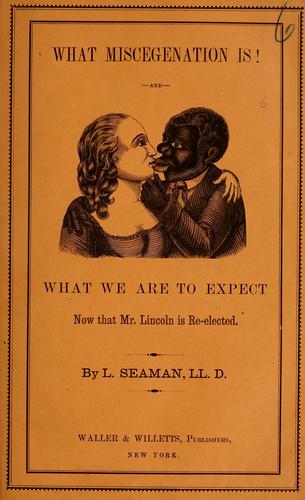
It seems using trusted religious beliefs to scare religious folk/vilify your political opponent is nothing new:


During the years when I was a devout Christian with conservative beliefs about homosexuality, I disliked comparisons of race and sexual orientation. I believed that people weren’t born homosexual, but they were born (insert non-White race) and thus it wasn’t fair to compare the two marriage/discrimination issues. Even if there were homosexuals who didn’t choose that orientation, they could still hide it and blend in if they really wanted to – non-Whites couldn’t. Of course I acknowledged that this would be a miserable existence, being in the closet, but I also believed that if God said we shouldn’t do something, we shouldn’t do it. Simple. Easy, no – simple, yes.

I have done a lot of thinking about how we (religious folk) change our religious beliefs based on the culture we live in. One of the foundational ideas in Christianity is that God is unchanging and that what Jesus taught 2,000 years ago applies today. If you’re from a Christian culture of Biblical inerrancy (believing that the entire Bible, while better understood through context, is true and relevant to our lives today) the way I was, you aren’t supposed to just rely on the New Testament. Jesus said he didn’t come to destroy the Law (i.e. the more hardcore rules we see in th Old Testament/Torah), rather, he came to fulfill it. I.E. you can't throw out Deuteronomy no matter how much you might want to.

There are arguments that Jesus’ teachings don’t contradict the problematic Old Testament rules about marriage and slavery; that Jesus didn’t come to tangle with our earthly laws or politicians (this is often in response to questions about why Jesus spoke about slavery without condemning it - wouldn't it have been so much easier if he had?). There are arguments about homosexuality and marriage that are based on whether Jesus ever talked about the two topics (he didn’t say anything about homosexuality, he did talk about marriage, divorce and adultery).

At any rate, the Church has been against miscenegation for a long time and they used the Bible for backing. This faith that is supposed to be resolute, unchanging and our guide through life – well, the faith got it wrong. Really, really wrong. At least, that’s what we believe today. This certainly isn’t the first time this has happened. From priests marrying or not marrying, to forced conversion, to divorce and even whether you can receive forgiveness for sins through prayer or financial donations – the Church has changed it’s mind on a lot of stuff, big stuff. Stuff that the Church claimed was From God So We Must Believe In It.

Centuries later, we can see how wrong the Chuch was on those things. Now we know the impact politics, power, money, wars, cultural traditions, etc. had on the Unchanging Word of God. But at the time, things seemed very much right to the people who were there. Things seemed to have Biblical backing. Things were taught by the clergy, who were God’s representatives, and they should know. And those teachings made sense to the people.

Here’s my point: We keep forgetting that - to use a Biblical phrase - there is nothing new under the sun. Why do we insist on such arrogance, on saying, "I know that every single generation and church before me has gotten some major thing wrong, but I'm pretty sure that this time, finally, WE GOT IT."?! I've been told (and I used to argue) that we can't blame God for man's misunderstandings. But - the only thing we have to rely on is man. It is man who we follow as clergy. It is man who decided what was written down in scripture. It is man who decided which parts of scripture are really from God and which parts aren't. It is man who has taught millions of people that XYZ was a Biblical, Godly thing . . . and it all turned out to be a lie or a mistake or a problem with translation. God isn't going to come down and speak to me himself, so if I am going to learn about God through organized religion, it is going to be through the words and actions of men.

I do not trust the Church’s interpretation of scripture. I do not trust the way the Church (through internal and external pressure) has manipulated what we now have as the Bible. I do not trust that what we have today as a blueprint is what God wanted us to have, if God really did give it to us. I do not trust the Church that only just (and still not completely) gave up teaching that my husband and I should not be married. That our children are doomed to hell for generations. I do not trust the Church that continues to teach these sort of things about homosexuals. I believe in a century or two our descendents will think we are as ridiculous as I think people were, only 50 years ago, as they picketed the Loving vs. Virginia trial.

These people were sure they were full of the light of Christ and only saying the hard, unpopular things that needed to be said to protect our society and to be in line with God's Word.

And really, that is the root of it all. I can’t trust my faith, my Church, my Bible, my clergy, my fellow Christians to have a good handle of the truth, the real right and wrong of this world. Homosexuality isn’t the only issue here – my lack of trust is unfortunately spread across the whole faith – but my change in perception, my growth in relationships with homosexuals has absolutely impacted my ability to trust my faith. I know there are people who are able to reconcile what the Bible says about homosexuality with their personal belief that homosexuality isn’t wrong or sinful. I don’t know how to do that. I’m not very good at ignoring the uncomfortable parts of the Bible. In the past, when I came across them, I studied hard to understand what they were about (and the Church has a good explanation for almost everything) and when I couldn't find a satisfactory answer, well, you know . . . God's ways aren't our ways and his thoughts aren't our thoughts. This is the Biblical response when there is just no good answer for what God has purportedly done.

If I can’t trust the homosexuality part, I can’t trust the God part, the Holy Spirit part, the Jesus part. I can’t trust the salvation part. That's where I am.


Tomorrow: The Fallout

Sunday, July 29, 2012

The Tricky World of Racial Identifiers

So I'm in my hometown of Wichita, KS this week and went to the mall with my sister in law, neice and daughter. On our way out, we were trying to figure out where a certain restaurant is, and I decided to ask a couple mall employees who were on their way out of the building. The woman was White and the man was Black.

The woman said the restaurant was at Harry and Woodlawn and then the Black guy says, "But you probably don't want to go there, there's lots of Black people there."

I laughed and said, "I don't mind Black people - we ARE* Black people." He looked at me like I was crazy and I pointed to my daughter, who is biracial - Black and White. She is fair skinned with freckles, green eyes and red hair - red hair with a kinky, coiled, Black texture. At first glance, many people assume she's just White.

*Let me note that I do not mean to say I think I'm a Black person just because my daughter is, I was saying, "You insult one of us, you insult all of us".

The guy realizes that my daughter is biracial and starts backtracking, but he really just made it worse. "Oh, I was just saying that there are a lot of ghetto people, gang bangers over there."

So . . . he was trying to communicate ghetto and gangbanger by saying Black to me. Awesome. Then he starts touching his hair (which is long, curly & pulled back in a ponytail) and saying how he's "Pretty Ricky". Pretty Ricky is a term used for Puerto Ricans or Black people who look Latino (whether they are or aren't). I take this to mean that he's referring to our whole conversation - Race Can Be Tricky, Y'all - but who knows, maybe I read him wrong. I thanked them for the information and said, "Let's go." Then I ranted in the car for 20 minutes about the way people deal with race in my hometown and scared my sister in law because I was driving fast. Sorry, SIL!

Now - besides recounting this experience, I want to ask a question. I was telling this story on Twitter, and a friend asked me why I use a single racial identifier (Black) for my biracial daughter (specifically I said she is Black-who-looks-White), and whether I ever use "White." I thought about it, and no, I never refer to her or my other two kids as just White, though I occasionally refer to them as Black. More often we use "biracial", "mixed" (outdated & offensive to some, I believe) or "Black and White".

My response is that I let the kids pick their own identifiers and we've talked a lot about them so they know they can pick what they want, when they want. It's their right to decide who they are & how they present themselves. I know my daughter, especially, gets asked the race question (What are you?) often because she has White coloring, a mixture of features, and Black hair texture. She often has to defend that yes, she is in fact Black, because people (usually kids) don't believe her. She mostly says she is bi-racial, Black and White.

I tend to refer to my kids as Black when we're in a situation like the one above - where someone is not taking into account that they have someone non-White in their presence and are saying some foolish stuff. Now, I speak up whether they're with me or not, but making their presence known usually stops the speaking person in their tracks when they realize they're talking about someone actually in front of them.

I also told my friend that after thinking about it, if my kids call themselves Black, I don't feel as though they are denying their White side. But if they were to call themselves White, I would feel as though they are denying their Black side.

My friend is concerned that my perspective on this is adding to the "one drop" concept - that a single drop of Black blood negates a person's Whiteness. This is a concept that has been used to discriminate against people of mixed ancestry.

You all know that I care a lot about race, that I talk about it, learn about it, try very hard to grow and get rid of prejudices I've grown up with. What do you think about this, and how I've been viewing race in terms of how my kids identify, and how I identify them?

For myself, I think that my friend is right - I am bolstering that concept . . . but knowing that doesn't change how I perceive my kids' race. I'm not saying I won't work on changing this perception - I probably will. I'd like to know your thoughts, though.

Wednesday, April 18, 2012

The Privilege of Taking It Slow

In one of the racism discussion sessions recently at work, we were talking about the different levels of awareness and understanding we all bring to these sort of discussions, and to the broader experience of our graduate school. We were discussing how we often have to slow down or “soften” a discussion about racism or privilege so that White students will feel comfortable participating. A Black, female student was asking why we have to do so much “hand holding” when it comes to these topics. A White male student responded. (I’m about to paraphrase):

“I come from an area that isn’t diverse at all.  I had zero knowledge about diversity before I moved to Chicago to go to school here. So when I get here, start school, it’s overwhelming. I’m faced with learning about things I didn’t know existed, things I didn’t know were problems. As I learn more, it’s really hard. I feel guilt, I think about things I’ve said or done in the past. It’s emotional. I’m not saying that we shouldn’t learn about them, I’m just saying – when you come from where I come from, it’s overwhelming. That’s why I think you get a better response when you don’t come at it so hard. When it’s in your face, when people are pushing at you, you just shut down and stop listening. That’s just the way people work. If you want them to listen you can’t shove it in their face.”

The Black female student responded (again, I’m paraphrasing). “I think what you’re saying is evidence of your White privilege. When I’m out in the world, and when I come here and am sometimes the only student of color in my classes, when I’m the only African American student in my Diversity class, no one slows down for me. I don’t get to say, ‘Wait, this is too much for me. This is emotional for me and I’m not ready to deal with this yet. Please slow down.’ I don’t get to say those things, and the world doesn’t care. They just throw it in my face. You have the luxury of asking the people around you to slow down on a difficult topic because you’re not used to it, it causes you pain, you feel guilt, you need to process, it’s overwhelming. I don’t get any of that. This is in my face all the time and there is no slowing down for me so I can learn how to handle it at my own pace. I just have to deal with it.”

The students really listened to each other and considered what each other were saying. That gives me hope. 

Sunday, April 15, 2012

What is a "Safe Space"?

In the discussion sessions I’ve been attending on my lunch hours at the graduate school where I work, one issue has been brought up a few times. It is the idea of a “safe space” to have the difficult discussions about race, racism, racialized violence, racism in our world and in our school. We’ve started many, many discussions over the years with a mention of the room being a “safe space” to discuss things, i.e. “Be respectful, don’t laugh at someone’s thoughts, it’s ok to disagree but not to disparage someone else.”

A Black student challenged the idea of a “safe space”. “What is unsafe about this space?” she asked. (Excuse me while I paraphrase her). “When I think about safety, I think of growing up in Cabrini Green [a notoriously dangerous housing project that used to be in Chicago], of violence, drugs, gangs. What is dangerous about having a discussion about racism? Who is in danger?”

We worked on breaking this down. When we talk about safety or danger, the idea is that there is a threat somewhere. Who needs to feel protected by the mention of “safe space” and what about the discussion is threatening? When students of color enter our majority White graduate school, they don’t have anyone looking out for them, trying to make a “safe space” for them. This also doesn’t happen outside the school. The world isn’t worried about protecting their feelings – why should they be concerned with protecting the feelings of the world? Especially if protecting the world’s feelings means never challenging the world to examine its perceptions and beliefs about people of color. Why do White people need an assurance of a place being “safe” in order for them to agree to talk about racism?

What we came up with is that the perceived threat in these discussions is the threat of being called out. There is a threat of being labeled a racist for saying something offensive or uninformed. There is a threat of having your beliefs challenged or questioned. There is a threat of discomfort.

So what does “safe space” really mean? Does it mean you can listen to a discussion about racism and no one is going to challenge you on something you’ve said? Does it mean you should be free to listen and never contribute to the conversation?

I think at best, a “safe space” can only be safe in terms of respect. We should be able to have difficult discussions, we should be able to disagree. We should be able to challenge one another and push them toward a more-informed and thoughtful perspective about things. And we should do it respectfully. Respect doesn’t have to mean there will never be tension, or tempers, or emotional responses.Respect doesn’t have to mean you will convince others of your opinion. It simply means that in the midst of emotions, in the midst of calling someone on their attitude, you don’t call them a name. You don’t say something derogatory about them. You don’t curse at them or use body language that shows you think what they’re saying is total crap. That’s all respect is. That’s all safety can be, in this context.

You don’t get to be safe from having your views challenged. Not if you want to grow. And not if you want to engage with others who want to grow.

Thursday, April 12, 2012

Learning to be an Ally

If you’ve read this blog for a while, or follow me on Twitter, or are a Facebook or Livejournal or Real Life Friend, you know I care about racism. Combating it, that is. You also know I like to talk about race in general, ethnicity, background, socio-economic class, poverty, religion and the various issues that touch all of these.

In certain circles, I would be called an “ally”. An anti-racist ally. A White ally. I haven’t used the term a lot myself as it’s not mainstream enough to be recognized by everyone, and rather than talk about my own status I’d prefer to talk about my experiences & the experiences of others. I also am not really sure I have earned the title of “ally”. Can you be an ally if you care deeply and have lots of conversations with people? Do I need to put in X number of hours protesting to be an ally? How many books about anti-racism do I need to have read to be called an ally? I’m not sure of the answers to these questions. Deciding on a title for myself isn’t a big deal to me but the term is coming up often lately, and not just in blogs or books I’m reading.

The graduate school where I work has been hosting dialogue sessions on various diversity-related topics for years, but in the last few weeks we’ve seen attendence skyrocket. One session, which is designed for groups of 2-3 people to partner up & answer a set of questions about themselves (so we can get to know each other better), broke from its normal programming to host a session about White privilege and the “unfair” campaign. www.unfaircampaign.org is an online campaign to educate people about White privilege. Its tagline is, “It’s hard to see racism when you’re white.” Faculty taped posters from the campaign to their office doors, with mixed reactions. The posters show White faces with handwritten statements across their faces – statements that detail some of the things that are hard to see when you have White privilege, some of the offensive things people say to or about people of color. Some faculty and students reported feeling offended at the posters. Some felt the message was important but the execution was poorly handled. Others (including myself) thought the posters were a great conversation starter, and thought, “Finally! It’s about time we talked about this.” Our weekly “get to know each other” lunchtime dialogue sessions have turned into a three-weeks-and-counting series of discussions about these posters and White privilege. This week we’ll have session #4 and we’ll probably continue the series each week through the end of April, when students and faculty go on break before the summer semester.

We have also held two discussion sessions about Trayvon Martin, racialized violence, and our profession’s role in these issues. The first session was a packed house and being only an hour long, way too short to really get into the discussion the way we wanted to. So! Another one-time-only session is being turned into a discussion series. We held our second session this week and while less people came, we still had a good turnout and a fruitful discussion about race, “safe spaces” and the necessity for students and faculty who belong to the majority group (Whites) to stand up as allies alongside our peers of color.

Essentially, I have been following the Trayvon Martin story in the news, continually bringing up stories, articles, blog posts about racism to my friends and family, and going to one or two group discussions each week where we hash out the difficult feelings and thoughts related to race and racism in the United States. It has been invigorating, frustrating, overwhelming, rewarding and clarifying for me. I wish everyone could experience this. The thing is, everyone can. You just have to choose to talk about it.

Monday, April 2, 2012

Trayvon Martin and the Court of Public Opinion

As I follow and participate in various discussions about Trayvon Martin’s death, I’ve noticed quite a few people expressing frustration that this case is being tried in the “court of public opinion”. They feel Zimmerman isn’t getting a fair shake and that we should all shut up about the case and let the legal system do its job. I contend that the court of public opinion is a normal part of our legal system doing its job, and has been since the first time humans were asked to make a judgment call about something.

Those complaining about legal cases being hashed out in the public and media are usually those who support the person "on trial" in public. I’m sure I’ve made that same complaint at one time or another. The thing is, our legal system never operated in a vacuum. The court of public opinion is, and always has been, simply one more tool in the legal system's "toolbelt". Public opinion influences the creation of law, the interpretation of law, it influences verdicts, sentencing, appeals.

Would we really want it any other way? We elect our judges, district attorneys, attorney generals, and so on and by doing so, we (the public) set the tone for the sort of judicial system we want. What if our lawyers, judges and others in the legal profession paid absolutely no attention to what the public wanted, what the public believed? Surely I’m not the only person scared by that thought. Unfortunately, there are many constituencies that already feel as though our legal system does not consider their wants and needs, but that is a blog post for another day.

I should note that this is not just my opinion. I took at look at the law school websites for Harvard and Columbia. Both have courses, centers and faculty publications that focus on or incorporate the notion that public opinion plays a real and vital part in our legal system and that the legal system has a major impact on public policy. Consider Columbia’s course on Law, Media and Public Policy or their faculty member’s book, Public Opinion and Constitutional Controversy,  or Harvard’s courses on Social Movements and Media, Race and Politics and their faculty member’s publication Court of Public Opinion: Government Accountability and Judicial Independence . Obviously law schools consider the court of public opinion to be relevant to their industry and and an important part of their students’ education.

When it comes to Trayvon Martin, is it appropriate that the public weigh in with their opinion before George Zimmerman is given his day in court? I certainly think so, and the reason is very simple:

Our legal system had already determined that Zimmerman’s actions were within the bounds of the law before the national public ever got wind of what happened to Trayvon. The legal system decided this the very night that Trayvon was killed, when they took Zimmerman at his word that his actions were legally justified and chose to not perform a standard and thorough investigation.

Even in the weeks that followed Trayvon’s death, the Sanford Police Department acted in the interest of George Zimmerman and against the insterest of Trayvon’s family. It was not until the public got wind of the story – through media and especially through social media – that the SPD’s incompetence was questioned. It wasn’t until the court of public opinion lost its mind over this case, that the FBI took at look and said, “You have messed this up and we’re taking over.” We still don’t know whether Zimmerman will face trial for a crime related to Trayvon’s death, but we have a much better chance of that happening now that the FBI is involved.

When you have a system that is already biased and structured to support one segment of the population over another, the court of public opinion is vital to the service of justice. It also facilitates public discourse on difficult topics – in this case, topics like racism, profiling and violence. These conversations are vital to the progress of our justice system and our national health. Do you really want a justice system that has no interaction with the will of the public?

Wednesday, March 28, 2012

Do Trayvon's Imperfections Mean He Doesn't Deserve Justice?

Has your perception of Trayvon Martin changed recently? Did the pictures of him with a grill in his mouth, the knowledge that he was suspended for having a plastic baggie w/trace amounts of marijuana make you think of him as a “thug”? It turns out that he’s bigger than he looked in the earliest released pictures of him, does that make you think differently of what happened the night that he died?

I think one of the questions we have to ask ourselves is, “Does a person need to be completely innocent in order to deserve justice?” I sure hope not, otherwise I’m SOL if something bad happens to me. We play a dangerous game when we decide someone isn’t worthy of receiving justice – or even due process to begin with – because of things they’ve done in their past (no matter how recent that past is). Where do we draw the line with this sort of reasoning, and who makes that decision?

Does Trayvon’s suspension, or his grill, or what he said on Facebook/Twitter change what happened the night he died? Does it change the fact that he was unarmed? Does it change the fact that he was breaking no laws by walking through a residential neighborhood? Does it change the fact that the police dispatcher advised Zimmerman not to approach Trayvon, but he did so anyway? Does it change the fact that the police still haven’t arrested Zimmerman?

No, these things haven’t caused facts to change. They have, however, changed some people’s minds about whether Trayvon deserves justice. While this is unfortunate, it’s also pretty normal. We feel sympathetic to people when we identify with them, and we tend to have less sympathy when we perceive them as being “bad” or “other” in some way. What “bad” means is subjective and different for every person.

Natalee Holloway was drunk the night she was killed. Was she bad? Did she not deserve justice?

I knew a guy who was killed by accident when his friend was messing around with a gun. This was at a party where teens were drinking underage (i.e. illegally). He was not nice to me and was a bit of a bully. Was he bad? Did he not deserve justice?

JFK cheated on his wife. Was he bad? Did he not deserve justice?

A person might scare us, they might look like something we can’t stand. They may be a jerk or promiscuous or dishonest or obnoxious. They may be involved in something illegal. They may make their living by stirring up drama and conflict. That does not mean they should be afforded any less a chance at justice than anyone else.


Whatever Trayvon was involved in, whomever he was, does not change the fact that his death did not need to happen and was not deserved. If a week ago, you believed that what happened to Trayvon was unfair and that justice must be served, then you should believe that now. It was not Trayvon’s responsibility to us to be perfect and living up to our personal standards of “good”. Rather, it is our responsibility to Trayvon – and imperfect people everywhere – to uphold legal and ethical standards of justice. You may like and identify with Trayvon less, but that doesn’t mean he deserved to die.

Friday, February 3, 2012

Ron Paul’s Ghost-writer Revealed: It’s the Honey Badger!

A while back in the GOP primary campaign, some of Ron Paul’s old newsletters resurfaced again, which has happened several times as he’s gone through different campaigns. They are nasty things, full of horrid and blatant racist statements (plus a lot of Dude It’s Totally Cool to Stockpile Weapons For Our War Against The Government, Let Me Tell You How To Do It Without The Feds Finding Out pro-militia stuff) and hateful stuff towards homosexuals, people with AIDs, Muslims and more. I realize that I am way late to speak on this – the story is basically dead and it doesn’t seem to matter now anyway because he’s not going to win the GOP nomination. I can’t imagine that he will ever be our President. Still, there is a point that I haven’t seen anyone discuss (or maybe I just haven’t read extensively enough) that I wanted to go into a bit.

A couple of disclaimers –

1) He has acknowledged that others ghost-wrote for him, he made statements of being very saddened by the things that were written in his name, and he has apologized for those things appearing in his newsletters.

2) On a variety of issues (though not on all of them), I agree with Ron Paul. Because of his personality, I used to like Ron Paul. In the last election, I think, I appreciated both Ron Paul and Mike Huckabee for certain things (just like I appreciated Dennis Kucinich, crazy ass Mike Gravel and in the most recent primaries, Hunstman). I like politicians who aren’t 100% party-line and those who seem genuine. I like the guys who aren’t the slickest campaigners.

Having given those disclaimers, here’s why I don’t buy his excuses of ghost-writers-gone-rogue, and I don’t buy his apologies.

If I had a newsletter – the Ashley Ray newsletter – that I wrote sometimes, and that others wrote for sometimes – it would be understandable to assume that what is represented in those newsletters is what I agree with, right? What would happen if someone who was writing on my behalf, unbeknownst to me, wrote some terribly racist things, and then the newsletter was published?

Do you think that the people reading the newsletter would notice?

Do you think that the people who work with and for me would notice?

Do you think someone would think it was odd that suddenly some statements are being published in my newsletter that are 100% contrary to my actual beliefs?

Do you think they would say something to me?

Do you think I would hire someone to write for me that had those sort of beliefs?

If the Ashley Ray newsletter said all those terrible things, I know without a doubt that the people who read it would RUSH to me and want to know what was going on. They would be concerned because obviously I don’t believe those things.

What I think is – Ron Paul employed people who held these beliefs. If he didn’t approve what was written & truly had no knowledge of them beforehand, he employed people whose belief in these things were so strong that they felt bold enough to put them in their employer’s newsletter. That is a really bold thing to do, right?

And after it happened – did readers freak out? I don’t know. Did they contact Ron Paul and tell him they were disgusted with what was written? I don’t know. Did his other employees freak out and alert him? I don’t know.

What I do know is that the newsletters didn’t stop. They went on for YEARS AND YEARS. We’re supposed to believe that issue after issue, there was a perfect storm of:

· Crazy ghost-writers

· Inattentive employees

· Readers who don’t actually read

He had no idea and no one – not his friends, family, employees, community nor supporters thought anything was amiss. If the Ashley Ray newsletter published that bullshit ONCE – I’d have people tripping over themselves to find out what in the world had happened because there is no way the Ashley THEY knew would write something like that. And if it continued, issue after issue? I’d lose my supporters. The people who faithfully read what I write DISAGREE WITH THAT BULLSHIT AND WOULD NOT WANT TO KEEP READING IT. They could no longer, in good conscience, support me.

My guess is – whether he knew about it or not – no one thought it was amiss because it DID represent what he believed. The ghost-writer felt ok saying that stuff because he knew it was what his boss believed. He continued to write it because he was not fired or even told to simply STOP IT. People did not think anything was amiss because HE BELIEVES IT AND THEY BELIEVE IT TOO.

And if somehow, the perfect storm really did happen? Ron Paul needs to find new friends, family, employees, community and supporters.

Thursday, January 5, 2012

Rut Roh, White Girls!!

Have you seen @Chescaleigh's video, "Shit White Girls Say . . . to Black Girls"? It's hilarious and true and good for conversations!

So what do you think - have you said or done any of this stuff?

I certainly have, most recently using the word HOLLA!!! a lot. Like, A LOT. Of course, I actually say "holla" and not "holler". ;)


You can see more funny videos by Franchesca here, or check her out elsewhere:

Tuesday, May 17, 2011

Hard Truths Aren’t True, Just Hard To Read Without Putting My Fist Through A Wall

psychology today Psychology Today recently published an article written by Dr. Satoshi Kanazawa, an “evolutionary psychologist” and regular contributor to PT via his blog-space there, “The Scientific Fundamentalist: A Look at the Hard Truths About Human Nature”.

Kanazawa’s article was titled, “Why Are Black Women Less Physically Attractive Than Other Women?”

Someone on Twitter brought my attention to the article and I read it, getting more upset the more I read. The article is no longer accessible on the PT website but you can read it in its entirety here.

The article basics: Research indicates that we think Black men are more attractive than other men, but we think Black women are less attractive than other women.

I now have a copy of the article from someone who had the foresight to copy/paste it into a Word doc, but I did get to read it all the way through before it was taken off the site. The only reference to the research done to stake these claims is the mention of the “Add Health” survey taken by respondents (men and women) in three stages. It says that respondents were surveyed three times, with the same questions each time. There is no link to what Add Health is and there is no other information provided in the article about who administered the survey, who these men & women are, how many there were, what races, ethnicities, ages, etc. they were, or what questions were asked.

I Googled, “Psychology Today Add Health” and then “Add Health” and found a few different results that pointed to “Add Health” being a shortened name for a major study. The National Longitudinal Study of Adolescent Health interviewed over 20,000 teens and over 17,000 of their parents about many things, however, the survey is considered to be in general, about sexuality. Beginning in the mid 1990s, teens in the United States were surveyed, then a few years later were surveyed again (though surveyors weren’t able to find the entire original sample group), then a few years later surveyed again. The study reports its findings from the entire six year period.

Having read this far, you might think, ok . . . so what? A poorly referenced article tells us that according to a major U.S. study, teens and their parents think Black women aren’t as attractive as other women. That really sucks.

And?

Here’s the “and”: MY BAD, the language of the article doesn’t actually say that people think Black women are less attractive. It flat out says, Black women ARE less attractive. For example, it says,

“It is very interesting to note that, even though black women are objectively less physically attractive than other women, black women (and men) subjectively consider themselves to be far more physically attractive than others.”

It also states that there are differences in intelligence, based on race:

“Nor can the race difference in intelligence (and the positive association between intelligence and physical attractiveness) account for the race difference in physical attractiveness among women.”

Bell Curve, anyone?

It gets worse. This article states opinion as though it were fact and it misuses and mis-states the results of research undergone for other purposes . . . but it also is operating under the premise that the European standard of beauty is the standard that all should be judged by. That photo up at the top? That’s the image that PT ran with this article. The findings that Americans think Black women are the least attractive of all the races? Sad and disgusting, but indicative of our accepted and perpetuated standard of beauty. Guess which race has features that consistently do NOT fit inside the measurements of that photo? And guess which race does?

Though the accepted cultural belief that Black women aren’t beautiful – are actually LEAST beautiful - is very sad, it’s not shocking to me. What IS shocking (Wait, why? Why is it shocking?) is that an enormous publication like Psychology Today would publish this crap. You know, it would have been one thing if they’d published the findings and said, “Man, we have work to do! We all know beauty is subjective and these results point to some serious problems in our society’s perception of beauty. What can we as psychologists and mental health professionals do to combat this?” But no – they published an article that had ZERO links to references, stating that Black women ARE less attractive than other women. Period.

Did you know that people of color (POC) are largely under-represented in the field of psychology? I work with psychologists and people studying to become psychologists – I see the anecdotal evidence to this five days a week. Guess where else POC are under-represented? In receiving care for their mental health. And of those who do receive care? They are usually treated by someone who is White.

That editors at Psychology Today saw this article as fit to publish boggles my mind. We have GOT to do better.

Here are some more great takes on this article:

Kristen Howerton from Rage Against the Minivan (includes 2 great videos and a comment from me! ha)

Racialicious (includes awesome graph and snippets of blogs from all over)

Confessions of a Cybernegress (last sentence packs a punch. So true!)

Kristen Howerton again – thoughts on the way Twitter was used to call out Psychology Today

And here is a letter from another author published on Psychology Today . . . Hmm . . . should they be off the hook?

Monday, April 25, 2011

Confronting Racism – The Wrong Way

A week or two ago, I came across a link in Twitter that led me to an article detailing a poll. The article’s headline stated that half of Mississippi Republicans thought interracial marriage should be illegal.

I was immediately angry. I clicked through to the featured poll to see exactly what was asked. It turns out that only 400 people were polled and the poll was primarily asking participants which local candidates they supported. There was only one unrelated question, and it asked if the participants believed interracial marriage should be banned. I believe 46% (so just under 200 people) said it should be banned. A smaller number said it should not be banned and another group said they weren’t sure.

I don’t know much about polling organizations so I had no idea whether this was a credible source, but after noting that only 400 people had been polled and only one random question asked about interracial marriage, I thought the headline – generalizing that half of Mississippi Republicans (i.e. likely a significant portion of the state) wanted interracial marriage to be illegal – was at the very least inflammatory. It was pretty obvious that the polling organization and news source was hoping to draw a tie between the Southern GOP and racism.

I didn’t really care. I was pissed, knowing that there are a hell of a lot more than 200 people in our world that believe these things. I re-tweeted the article and posted it on Facebook. I noted on Facebook that I thought the headline was inflammatory, but invited my Facebook friends to remove themselves from a relationship with me if they believed my marriage should be illegal. Oh yeah, readers – if you didn’t know, I’m White, my husband is Black and our three kids are both.

A friend commented and pointed out that the poll’s credibility was in question. I agreed, but stated that my point wasn’t to throw mud on Mississippi Republicans, rather to state clearly that I didn’t want to be in a relationship with people who thought my marriage should be illegal.

A couple people commented about how much racism sucks. Then an old friend – someone I haven’t been in touch with since the late 90s except for a couple short “Hi, how are you”s on Facebook – commented about how much he disliked news items like this. He stated that he believed that these “issues” were nothing but media hype and that it was only the media keeping them alive. If media would shut up about it all for a while, we’d see that the very next generation would have no racism at all.

At this point, I was already regretting having posted the article & poll. I knew I’d made a mistake trying to use sensational faux-science to make my point and that it hadn’t really added any credibility to my point. I could have just written a simple status with no link attached, asking friends & family to remove me if they believe in an interracial marriage ban. I only barely owned up to this mistake and instead responded to the old friend, noting a few anecdotal and personal experiences with racism that had no connection to media hype whatsoever.

I mentioned the time a family member (through marriage) gave me a lecture on how there are Black people and there are niggers. I noted that people have said to my children (in front of me, even) that they are lucky to have turned out so light skinned. Like me. Not like their Dad. I reminded him that there are still churches in the U.S. that teach that interracial marriages aren’t blessed by God (and no, I’m not talking about Westboro Baptist). I didn’t mention that these same churches teach that the products of interracial relationships – you know, MY KIDS – are also exempt from blessings until something like 7 generations have passed. I.E. once one or the other race has likely been bred out (at least visibly). These aren’t churches affiliated with militia groups, they’re regular conservative, Bible-belt churches that don’t consider their beliefs racist. I told him that if he lives in a world where racism only exists in the media, then he was a lucky guy. That wasn’t my reality and it wasn’t bound to be the reality of my grandchildren, even if the media never said another word about racism.

The old friend backpedaled a bit – he said that those things were said by ignorant people and he was sorry they’d happened to me. He said he hates when someone tries to draw a correlation between things he considers unrelated (the GOP and racism) and that is what he was responding to.

I think the truth is that we each responded hotheadedly to something that pushed our personal buttons. I knew I was posting a poll that lacked credibility and he pretended that racism only exists in the minds of people who are out to get his political party . . . each of us had our own real problems we could have been more forthright about.

I could have said, “If you think my marriage – and more importantly the lives of my children – should be illegal, that cuts me to my soul and I don’t want you looking at pictures of my family, of these children, I don’t want you thinking evil things about us and pretending to be someone who loves me. I don’t want to see you one day, with my family, and have you say something really hurtful that means nothing to you but will be etched on their hearts forever. I want to protect us from that so please get out of my life.” But I didn’t.

He could have said, “I believe in my party’s ideals and I don’t agree with racism and it really bothers me that you see a link between the two. I’m so tired of being labeled a racist just because I’m fiscally conservative . . . when you say something about the GOP, you’re referring to me as a member, and I resent that because I don’t believe those things. It would be one thing if your poll had any credibility, but it doesn’t. So you’re pointing a finger at me for something that was actually concocted with the intent to deceive.” But he didn’t.

I was sick to my stomach all night over this – oh, I’ll fight for what I believe in, but the conflict tears me up – and in the morning, what made me feel so bad was this: My actions added weight to the belief that racism only exists in media hype. Besides the handful of people who commented on the poll, how many others read the headline, saw my upset response, noted the comments about the poll’s lack of credibility, and thought, “Yep. Just another example of someone crying ‘racism’ where it doesn’t really exist”?

I left one more comment that morning, a long one – and then I deleted the status, poll and comments. I told a story about an old friend, who, upon hearing that I’d gotten married, allegedly gave only this response: “I can’t believe Ashley married a Black guy.” I don’t know whether that guy really said this, it was told to me second-hand. But I believed it. I was shocked and hurt – from his family, friends and community I’d expect that sort of response, but from him? No way. I also hadn’t been in contact with him since the late 90s, so when he found me on Facebook last year, I didn’t want to get into it. “Oh, hi, old friend! By the way, did you express regret over my marrying a Black guy?” That’s an uncomfortable conversation. Confronting someone who has hurt you is uncomfortable. Talking about race is uncomfortable. But I should have done it, because when I saw that poll, I thought of that guy. I thought of the fact that I never asked him if he said that, I went ahead & added him on Facebook, and he had access to pictures of my family. What does he think when he looks at them? When I posted that poll, I was speaking to him and any others like him.

Except I wasn’t doing it with any courage.

I thought about all of this again last week after reading a couple articles about a GOP official in Orange County, CA, who sent out a Birther-themed email showing President Obama as a chimpanzee. The photo’s caption said something like, “Now we know why there’s no birth certificate.” The official was  denounced by her local GOP chairperson and she was asked to resign her position (apparently the most they can do TO her is censure her). She has refused to resign. She initially said she didn’t see anything racist about the email, that it was strictly political. She said she isn’t racist, she has “Black friends”. This has been in the news and Friday she issued an apology, stating that she hadn’t considered the historical ramifications of comparing Black people to apes, and that she’s sorry for offending anyone.

You know what I wanted to do? I wanted to post that article on Facebook. I wanted to post it right on that guy’s page who said this stuff only exists in media hype. I wanted to hear him try to explain away how what she sent out wasn’t really racist. I wanted to tell him that this is why racism isn’t going anywhere. We have parents. And pastors. And elected officials. Teaching their children, congregations and constituents that racism is ok. THIS is why racism is around, not because the liberal media has it out for the GOP.

But I think I burned that bridge. I could make the most eloquent, educated, practical argument, I could send him story after story of For Real Racism, and I don’t think it would matter. He already has a belief growing in his mind that racism is just a story people make up when they don’t get what they want. And I fertilized that belief.

Tuesday, March 8, 2011

Continuing the Conversation: Black History Month

A few weeks ago I wrote a short post asking what my readers thought about Black History Month. What is the purpose of the month, and has it been effective?

I received mixed responses, which were a good representation of the different conversations I’ve been a part of, as well as the articles and interviews I’ve read about Black History Month. There seems to be no consensus about whether Black History Month is a good thing, or whether it has been effective.

Black History Month was first Negro History Week, started by Carter G. Woodson, a historian and author. He felt that the history of Black folks in the U.S. wasn’t being represented, and he hoped Negro History Week would be a tool for education. This began in 1926 and in 1976, Negro History Week was expanded to Black History Month. February was selected because it’s the month when Frederick Douglass & Abraham Lincoln were born (insert joke here about February also being the shortest month of the year).

NY Times article: 4 Years After Black History Panel’s Birth, Its Work Is Still Deferred

I was born in the late 1970’s, was a child of the 1980’s and a teen in the 1990’s. I don’t know what Black History Week/Month was like before then, or what impact it had on education and society. I can say that as a White, middle class girl in a mid-sized city in the Southern Midwest, I got a lot out of Black History Month. I can’t say I remember all the facts I was taught – just as I can’t remember all the facts I was taught in my “regular” history lessons. However, what did stick was the idea that there are people in my community, country and world, who haven’t been given credit for the positive work they’ve accomplished, and whose oppression has been downplayed and overlooked. I probably can’t give all the credit to Black History Month; I seem to be drawn to these issues no matter who is involved. Still, Black History Month made an impression on me and I know it helped introduce the idea to a lot of my peers that the average American isn’t hearing the full story of what went on in our nation’s history.

Is that all Black History Month was supposed to do? Maybe so. Did Woodson know it could only be a place to start? Did he believe his week would be able to turn our society upside down and fix all the ills we have in regard to racism? I don’t know the answer to these questions. I do know that Black History Month hasn’t fixed everything.

So – where did Black History Month go wrong? Or, where did WE go wrong with Black History Month? If Black History Month was never supposed to be capable of fixing all our racism issues, what else needs to happen? Is Black History Month actually holding us back from certain progress, because people think it’s proof we’ve learned all we need to learn?

I look forward to exploring these questions in the future, here on my blog. I hope you’ll join the conversation!

Wednesday, February 23, 2011

Chicago Politics: Post-Racial?

Yesterday was election day in Chicago (surely in other places as well) and a couple of the election results were historic. The biggest newsmaker was the election of Rahm Emanuel as our new Mayor. Chicago is the 3rd largest city in the U.S., so the person in the Mayor’s seat has a great deal of responsibility and power. Chicago is known for its corrupt politics . . . I’ve said that in a system so corrupt, you can’t survive and operate without being a part of or at the very least allowing corruption. We’ll see if any of that changes under Rahm (which is what people call him, by the way – not Emanuel – even his campaign signs say RAHM in large letters, where most campaigns emphasize the candidate’s last name).

Rahm Emanuel and his RAHM FOR MAYOR sign.

Rahm’s election was historic in a couple of ways. First, he’s not a Daley!

Richard J. Daley

Richard J. Daley was the Mayor of Chicago from 1955 until 1976, when he died. His story is very interesting, you can read the highlights here. He was the Mayor who held the second-longest term in Chicago – his son, Richard M. Daley beat him – he was Mayor from 1989 until . . . well, he’s still our Mayor. Rahm will take over for him in May. Learn more about him here.

Richard M. Daley

Second, Rahm is Jewish – he will be Chicago’s first Jewish Mayor. He’s also spent time as Obama’s Chief of Staff, as an advisor to Clinton, and as a congressman. His entire family is interesting, but you might enjoy the fact that Jeremy Piven’s character in Entourage is based on Rahm’s brother Ari, who is an agent in Hollywood.

Another historic election result was Chicago’s first Indian-American alderman (alderman are kind of like neighborhood Mayors), Ameya Pawar, who works at Northwestern University.

Ameya Pawar

He notably ran as an Independent and is only going to accept a $60K salary rather than the standard $110K salary offered to aldermen, and will only serve 2 terms. You can read more about his plans as alderman here.

This article details why Pawar’s win was surprising, and gives you an idea of the cronyism that persists in Chicago politics. I’m having issues with the quote at the end of the article – no one from the neighborhood is from Chicago? Said by a woman from “good Chicago Polish stock”? (FYI, Chicago has the 2nd largest concentration of Polish people in the world – Warsaw has the 1st). I’m definitely one to understand frustration at gentrification, but I hate the implication that is given by tying this quote to a story about the first Indian-American alderman. He’s from the Chicago area yet the implication is that he’s not really from Chicago. Because he’s suburban? Or because he’s Indian?

The reason I began writing this entry is because last night, a newsanchor covering these stories noted that because people of all races voted for Rahm, and because an Indian-American defeated an Irish candidate in a traditionally old-Chicago ward, we are now living in a “post-racial Chicago” . . . Obama’s election was also referenced.

I’m sorry, but we are hardly post-racial. Chicago is an incredibly diverse city – ethnically, racially, socioeconomically. I’m sure we have someone from every corner of the world here. Yes - wards that have traditionally voted for one race or ethnicity voted for non-traditional candidates yesterday – and that’s awesome. But Chicago is also an extremely segregated city, and poverty is greatest in Chicago’s “brownest” neighborhoods. I don’t think we’ll ever live in a post-racial world, country or city, but saying things like this just gives everyone an excuse to stop working toward improvement.

Wednesday, February 16, 2011

Black History Month: What's the Point?


My computer ate my original post, so with this re-write I'm going to be really brief:

What, in your opinion, is the purpose of Black History Month? Why is it around? Do you think it has been effective in its mission?

I plan to re-visit this topic a few times and it will probably lead to other related topics.

**note - I do have opinions on this topic . . . just hoping to get a little feedback first before I share my point of view. If you're looking for an idea of my perspective, click on the "race" and "racism" tags at the bottom of this entry**

Disclaimer - I know race can be a scary topic to discuss, so let me be clear - this is a safe zone to talk! I honestly don't think anything inflammatory is going to go on in the comments to this blog, but if you're hesitant to say anything because you think I or someone else will flame you - know that I don't get down with that stuff. I like to talk about these difficult topics but I don't think being mean is productive. Even when disagreeing, I try to do so respectfully.

Monday, October 11, 2010

Reconsider Columbus Day!

Do you celebrate Columbus Day? Do you talk to your kids about it? Do you not really think about it?

I understand why we celebrate it - it's good to think about where "we" started. But is that really where "we" started? And is it ok to act like what Columbus (and his peeps) did was honorable, since it got us to where we are today?

I don't think we should celebrate Columbus Day. I think we should replace it with a Native American remembrance day. Not just to celebrate their culture - that's important and I'm glad we have a Native American Heritage Month (November) but Iwould like a day that focuses on honoring the great loss that the native nations suffered.


I hate our reluctance to admit that we screwed up. Today, one of my co-workers posted a motivational quote on Facebook, and it started out something like, "Remember, there are no mistakes - only lessons learned."

Ok - I get that sometimes we beat ourselves up too much and get stuck focusing on the negative. But why can't we call a mistake, a mistake? We did likely learn a lesson from it - but it was still a mistake. Why live under a mantra of "I don't have regrets"? What is so wrong with admitting your imperfection? What is so wrong with saying "I have not always made the best choices?"

This bugs me, both personally and as part of our national culture. Why can't we just say that we got some things horribly wrong? Why can't we be willing to teach our kids that along with the "freedom" we fought for, we also stepped on a lot of people to get to where we are today?

This is the sort of blind nationalism and "patriotism" that I don't understand. I want my children to be able to see the good and the bad and to weigh pros & cons. I don't want my kids to blindly follow ANYTHING.

I think we should get rid of Columbus Day. It's time that we as a nation set this straight.

Visit the Reconsider Columbus Day website- learn about some who are petitioning to change the day. Here is the petition content (coloring mine):

To: All people of the world
Congress of the United States
Senate of the United States
President of the United States


We the undersigned come together before you to request that each of these governing bodies take all necessary action to bring about a Federal Holiday for Native American Elected Leaders, To include Congressional hearings on the racial exclusion of Native Americans in movies, television, sports advertising, music companies, etc.

With the special government to government relationship between the Indian Government of America and the Federal Government it is fitting for the Federal Government to enact this holiday, and conduct Congressional hearings.

Indian governments and the people they represent are requesting that the federal government bring about a National Holiday for Native Americans to be celebrated by all citizens of America and people around the world.

This holiday would pay tribute to Indian Tribal Leaders to include Alaskan Leaders and Hawaiian Leaders. This holiday would also pay tribute to those that endured the world's longest holocaust and most costly in human lives.

It is further stated that no Indian Government nor its people find reason to celebrate and pay for Columbus Day.Seventeen states do not recognize Columbus Day. The state of South Dakota has changed Columbus day to Native American Day.

Therefore be it resolved that the Federal Government should reevaluate Columbus Day by moving it back to its original day the second Wednesday of October and not be a tax paid holiday as is St. Patrick's Day and Octoberfest, and make the second Monday of October a Federal holiday for Native Americans.

The polls we conducted across the country show that the vast majority of Americans prefer changing Columbus Day as to creating a whole new holiday.

It is inappropriate for Indian children and children of America to celebrate Columbus discovering a nation of people and not having a holiday paying tribute to the people of those nations.


Wednesday, September 1, 2010


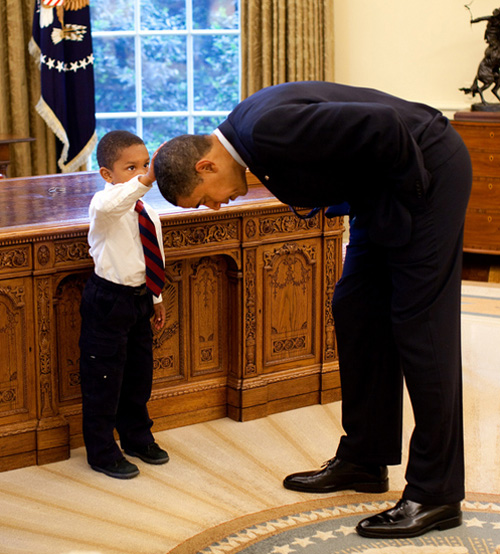
This photo from the White House Flickr account shows a young boy rubbing President Barack Obama’s head. Reportedly, “The youngster wanted to see if the President’s haircut felt like his own.”

Having a self-identified black man in the White House matters. Yes, it does.


I've had this photo and caption from Love Isn't Enough (formerly Anti Racist Parent) posted outside my office door for over a year. Today a new student stopped by to tell me she appreciated the photo and it was an example of why she chose to attend our school. The fact that I'm not only allowed but encouraged to express this sort of sentiment is why I chose my school as an employer.

In other Obama news, I had a good discussion with friends on Facebook today about whether combat for American soldiers in Iraq is really over or not. Looks like it's not - maybe combat lead by Americans but the truth is that Americans will engage in combat in Iraq indefinitely. Please do not think the war is over. The war simply has a different name in Iraq and a lot of it has moved over to Afghanistan.

Tuesday, June 29, 2010

Welfare

I am inching my way through some books on welfare, welfare reform, welfare racism.

The first one was really moving, the author interviewed 30 women on welfare (from different states, different regions, different size/type of town/city/rural area), who have kids. The book goes topic by topic & you see the women’s situations compared to each others . . . there are so many common themes. Hard-work, determination, hopelessness, abuse, abandonment, lack of education. So, so many cases where the women were abandoned by the fathers. Lots of abuse, and a surprisingly high number of women who were married to the father of their children . . . and the father left the family or was abusive or was an addict. Not as many cases of women who were never married.

There were a couple examples of women who were disabled or who were unable to work because there simply was no work in their area. The majority (and I mean like 90%, not 60%) had worked since they were teenagers in factory jobs, waitressing jobs, caregiver jobs. The problem is that the work available in their area, that they could get to with their transportation, that they were qualified for – was so low in pay and benefits (no flexibility on hours, if your kid is sick you lose your job, no health benefits, no vacation) that in order to survive they had to get on welfare. And still they lived a meager existence.

In the welfare reform book I learned that each state is different, but that the 1996 federal reform act required states to make ALL welfare recipients work. Some states (possibly all of them) have exemptions to hand out to special cases (where someone physically can’t work, for example). Some states use all their exemptions, some states barely use theirs. The percentage of exemptions was very small compared to the percentage of cases who had to work.

What I’m seeing over & over is that the requirements put upon those who get welfare benefits, and the training/education opportunities just don’t do enough to actually lift the families out of poverty. So the families aren’t getting welfare any longer but they’re still living in poverty, and now mom isn’t able to be in the home at all to parent her kids.

Did you know that in the beginning, welfare was given out to women whose husbands had died, because women weren’t yet enough a part of the workforce that without a husband/provider, the family would starve? And that only women who were seen as “good” and “worthy” were given benefits? The women who had children out of wedlock or who left abusive husbands (and surely other situations) weren’t allowed benefits because they weren’t seen as promoting the ideal values for society?

The actual purpose of welfare in the beginning was to allow women to stay home and raise their children because this is how you created a healthy society. But today if you want welfare benefits you have to work or prove that you are actively seeking work, or are in some sort of educational program (and often then you still have to work).

Women who receive child-support payments from their children’s father only get a small portion of the payment (something like $50 a month) if they are on welfare. The state takes everything over $50 to offset the benefits they are giving to the woman/children. So even if a woman gets a total of $500 worth of benefits from the state, if her ex pays $700 in child support, she gets $50 while the state gets $650.

This may vary state-to-state or it may be all states, – did you know that there is a 5 year cap for receiving benefits? And many states don’t allow those to be consecutive years? Some states have a system like this: 2 years on benefits, then you must survive for 2 years off. Then you can have 2 more years, then you have 2 more years off. Then you can finish up with your last year of benefits, and then you are done and can never receive benefits again, no matter what.

Did you know that some states give as little as $64 a month for children born to a mother who is on welfare? There may be other states that give more or less but I don’t have that info. That doesn’t seem like a big incentive to have a child to me. AND those benefits are not necessarily cash!

Did you know that some states give ZERO benefits for a child born to a mother who is on welfare? Again – speaks to the motivation of women having babies so they can live off the state via their children.

When the 1996 welfare reforms went into place, a ton of money was put into the welfare system . . . also a ton of regulations, to the point that resources were spent on creating duplicate forms in multiple formats . . . entering data into multiple databases . . . training & re-training & re-training. Red tape grew & grew & grew. Employees who worked for welfare agencies were given raises while benefits to the individuals on welfare were actually cut.

The number of benefit cases from 1997 – 2001 were cut in half! It is harder to get welfare, it is harder stay on welfare, it is harder to transition from welfare to an above-poverty situation, it is harder to manage welfare.

Yet the myths - that most people on welfare are freeloaders who are lazy, don’t work, are milking the system and live on welfare their entire lives - persist.

Saturday, June 26, 2010


PBS Independent Lens documentary: Crips and Bloods: Made In America is about how/why gangs got started in LA, how they’ve evolved and the conditions that keep the South Central LA community stuck in the cycle of gangs, drugs & violence. It also highlights the work that is being done to try to make changes . . . and the work that has to be done from outsiders in order to make change possible.

On the website, there is a map where you can hover over the different things like liquor stores, crime, home ownership & homelessness, gang violence, schools, prison statistics, employment, grocery stores, health clinics, hospitals – the information about the disparities of what is in South Central compared to more affluent areas of LA is disgusting.

The map also highlights some historical events that happened in South Central.

Definitely worth checking out if you get the chance!! You can check out a preview, look on the movie link above & on the top right of the screen. AND you can also find out when it will play next on your local PBS station – my station is going to show it again this Sunday, so it’s likely that yours will be showing it sometime soon as well.

From the director:
I made CRIPS AND BLOODS: Made in America because I was interested as a filmmaker and as a resident of Los Angeles in investigating why gang violence has been going on uninterrupted in Los Angeles for over four decades. I could not understand why this is going on in America and why no viable solution has ever been put into place. And it did not make sense to me, our country defeated Nazi Germany and Japan simultaneously and in less than a decade but we can’t stop gang violence. It made me wonder if as a society we would find a solution to this problem if instead of poor African American teenagers it were affluent white teenagers who were killing each other.

Kumasi, one of the principle characters in the film says this, “Part of the mechanics of oppressing people is to pervert them to the extent that they become their own oppressors.” I believe these young men involved in gang violence are carrying out their own extinction and the very sad truth is that our society is allowing this to happen. I hope people who view the film see these gang members as human beings caught up in a tragic nightmare and not as the animals and demons the media has made them out to be.

I believe people should see this film because this is a human rights issue that is happening inside of America and it’s happening every day in many of our largest cities—but it happens in silence. These young men are dying in silence and they are being incarcerated in silence. More people have been killed due to gang violence in Los Angeles than the long running sectarian conflict in Northern Ireland, yet very few know this fact. Young children in South Los Angeles are experiencing greater levels of Post Traumatic Stress Disorder than children living in Bagdad, Iraq. This is happening inside of our country.
—Stacy Peralta

Meet four of the men featured in CRIPS & BLOODS: Made in America.
Skipp

“I grew up in a home where my mother worked two jobs, but had three boys. …We were unsupervised, so I found my supervision outside of the home.”

Skipp was born Clifford Townsend in Los Angeles. Forty-four years old at the time of filming, he became a member of the Rollin’ 20s Bloods at the age of 13. Although he became inactive in 1998, he feels as though he has never really left his gang. He has spent almost seven years of his life in the U.S. prison system and is currently working towards his bachelor's degree in child development. Skipp recently created his own organization specializing in community intervention, re-entry, mentoring and gang intervention. He also assists with training Los Angeles Police Department officers on community relations and works within the city’s school system to make an impact on at-risk youths.

Kumasi

“…But the point is this: I'm a walkin' time bomb. I'm gonna go off. Some day, somewhere, on somebody. The question is: 'Upon whom?'"
Kumasi was born in Bronx, New York and moved to South Los Angeles at age three. Sixty-one years old at the time of filming, he joined the Slausons at age 10. He still considers himself a Slauson, although the gang became inactive around 1967. Kumasi has served a total of five terms, or about 18 years, in the U.S. prison system during his life. He currently works as a consultant and activist within his community and as a consultant in the entertainment industry.
Shaka

“So, a lotta times, man, I know morally I'm a good individual, but sometimes I gotta put that moral state of mind behind me and become an animal.”
Born in Los Angeles as Rodney Moralez, Shaka joined Mad Swan Bloods (currently known as Family Swan Bloods) at the age of 13. Twenty-eight years old at the time of filming, he still considers himself a Swan, although he became less involved with the gang after becoming a father, and has become inactive in recent years. Shaka has spent three terms, totaling six years, in the U.S. prison system. He is currently working as a hip hop and reggae artist in the music industry and is starting up a church and basketball program for at-risk youth.
Scrap

“I grew up in a house where my grandma and my uncle, everybody was sellin' drugs. You, know what I'm sayin'? I grew up to where when the police raid, they handed me drugs to hide…”
Born Raymond Ford in Los Angeles, Scrap was thirty-two years old at the time of filming. Growing up in Jordan Downs Housing Project in Watts, he feels that he was born into a gang. Scrap became an active member of the Grape Street Watts Crips at 11 years old and became inactive in 2003, after his best friend was murdered. As a juvenile, he spent one year in a youth authority camp. He currently works full time as a football coach, and part time doing gardening work for the city.

Tuesday, March 2, 2010

Ignoring a problem won't make it go away - Take 2


Yesterday, after reading My Sister's Farmhouse's new post on how Christian Private schools are just a euphmism for White Flight, I got all hot under the collar and posted about how Pioneer Woman's plans for teaching diversity to her chidlren were just wrong. They were wrongity wrong. Oh, and also? THEY WERE WRONG!!!!!

The comments at MSF devolved, oh, how they devolved. And some real racists came out. Of course, most people today don't look at them as racists, after all, where were their burning crosses? For example, just because they referred to non-Whites as people who have a new baby's daddy every month, that's not RACIST . . . they're just talking about their experience. Right? Anyway, reading those comments made my head explode so I had to stop.

Today I deleted my blog because it was just a rant and what good was it doing? Going back to MSF to check on the new comments ('glutton' might be my middle name) I see someone's link to their own reaction to Pioneer Woman's diversity blog, back when it was originally posted. And what she had to say, and what her commenters had to say, was everything I wanted to say yesterday, but couldn't, because my fingers wouldn't type properly (due to the rage).

So, here. Read what Megan and her friends have to say. It's what I wish I'd said.

Wednesday, May 13, 2009


Last night Vincent & I watched a new PBS Independent Lens documentary: Crips and Bloods: Made In America.


It was about how/why gangs got started in LA, how they’ve evolved and the conditions that keep the South Central LA community stuck in the cycle of gangs, drugs & violence. It also highlights the work that is being done to try to make changes . . . and the work that has to be done from outsiders in order to make change possible.

On the website, there is a map where you can hover over the different things like liquor stores, crime, home ownership & homelessness, gang violence, schools, prison statistics, employment, grocery stores, health clinics, hospitals – the information about the disparities of what is in South Central compared to more affluent areas of LA is disgusting.

The map also highlights some historical events that happened in South Central.

Definitely worth checking out if you get the chance!! You can check out a preview, look on the movie link above & on the top right of the screen. AND you can also find out when it will play next on your local PBS station – my station is going to show it again this Sunday, so it’s likely that yours will be showing it sometime soon as well.

From the director:
I made CRIPS AND BLOODS: Made in America because I was interested as a filmmaker and as a resident of Los Angeles in investigating why gang violence has been going on uninterrupted in Los Angeles for over four decades. I could not understand why this is going on in America and why no viable solution has ever been put into place. And it did not make sense to me, our country defeated Nazi Germany and Japan simultaneously and in less than a decade but we can’t stop gang violence. It made me wonder if as a society we would find a solution to this problem if instead of poor African American teenagers it were affluent white teenagers who were killing each other.


Kumasi, one of the principle characters in the film says this, “Part of the mechanics of oppressing people is to pervert them to the extent that they become their own oppressors.” I believe these young men involved in gang violence are carrying out their own extinction and the very sad truth is that our society is allowing this to happen. I hope people who view the film see these gang members as human beings caught up in a tragic nightmare and not as the animals and demons the media has made them out to be.


I believe people should see this film because this is a human rights issue that is happening inside of America and it’s happening every day in many of our largest cities—but it happens in silence. These young men are dying in silence and they are being incarcerated in silence. More people have been killed due to gang violence in Los Angeles than the long running sectarian conflict in Northern Ireland, yet very few know this fact. Young children in South Los Angeles are experiencing greater levels of Post Traumatic Stress Disorder than children living in Bagdad, Iraq. This is happening inside of our country.
—Stacy Peralta

Meet four of the men featured in CRIPS & BLOODS: Made in America.

Skipp
“I grew up in a home where my mother worked two jobs, but had three boys. …We were unsupervised, so I found my supervision outside of the home.”
Skipp was born Clifford Townsend in Los Angeles. Forty-four years old at the time of filming, he became a member of the Rollin’ 20s Bloods at the age of 13. Although he became inactive in 1998, he feels as though he has never really left his gang. He has spent almost seven years of his life in the U.S. prison system and is currently working towards his bachelor's degree in child development. Skipp recently created his own organization specializing in community intervention, re-entry, mentoring and gang intervention. He also assists with training Los Angeles Police Department officers on community relations and works within the city’s school system to make an impact on at-risk youths.

Kumasi
“…But the point is this: I'm a walkin' time bomb. I'm gonna go off. Some day, somewhere, on somebody. The question is: 'Upon whom?'"
Kumasi was born in Bronx, New York and moved to South Los Angeles at age three. Sixty-one years old at the time of filming, he joined the Slausons at age 10. He still considers himself a Slauson, although the gang became inactive around 1967. Kumasi has served a total of five terms, or about 18 years, in the U.S. prison system during his life. He currently works as a consultant and activist within his community and as a consultant in the entertainment industry.

Shaka
“So, a lotta times, man, I know morally I'm a good individual, but sometimes I gotta put that moral state of mind behind me and become an animal.”

Born in Los Angeles as Rodney Moralez, Shaka joined Mad Swan Bloods (currently known as Family Swan Bloods) at the age of 13. Twenty-eight years old at the time of filming, he still considers himself a Swan, although he became less involved with the gang after becoming a father, and has become inactive in recent years. Shaka has spent three terms, totaling six years, in the U.S. prison system. He is currently working as a hip hop and reggae artist in the music industry and is starting up a church and basketball program for at-risk youth.

Scrap
“I grew up in a house where my grandma and my uncle, everybody was sellin' drugs. You, know what I'm sayin'? I grew up to where when the police raid, they handed me drugs to hide…”

Born Raymond Ford in Los Angeles, Scrap was thirty-two years old at the time of filming. Growing up in Jordan Downs Housing Project in Watts, he feels that he was born into a gang. Scrap became an active member of the Grape Street Watts Crips at 11 years old and became inactive in 2003, after his best friend was murdered. As a juvenile, he spent one year in a youth authority camp. He currently works full time as a football coach, and part time doing gardening work for the city.
Related Posts Plugin for WordPress, Blogger...