Wednesday, August 8, 2012

Turning From My Faith: Interracial Marriage, Homosexuality and Losing Trust

In my last couple of posts I’ve explained how my perspective on homosexuality has changed. Today I’ll explain the role it had in my decision to turn from my faith.

For a couple thousand years, the Christian Church taught that marriage between different races was sinful and that the offspring from those marriages would be ineligible for salvation (heaven) for a number of generations (I think seven was the magical “Ok, now you’ve probably visibly breeded out any traces of that other offending race by now” number, but I could be wrong). This belief, though not mainstream any longer, is still taught in some churches in the U.S. I have no idea what is taught on this topic elsewhere.

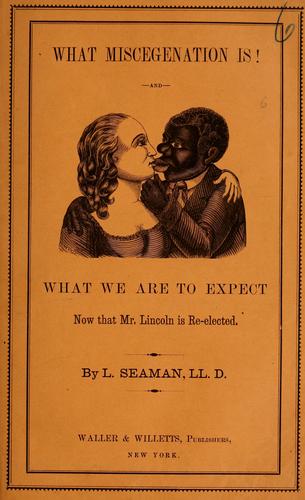
These teachings (and things like the slave trade) influenced those who were in power when the U.S. was being built, and for the majority of our nation’s existence, marriage between a White person and a Person of Color (POC) was illegal. Less than 50 years ago, the Supreme Court determined that these sort of laws were unconstitutional. Even so, as late as the year 2000, there were states in the U.S. with anti-miscegenation laws in effect.

It seems using trusted religious beliefs to scare religious folk/vilify your political opponent is nothing new:


During the years when I was a devout Christian with conservative beliefs about homosexuality, I disliked comparisons of race and sexual orientation. I believed that people weren’t born homosexual, but they were born (insert non-White race) and thus it wasn’t fair to compare the two marriage/discrimination issues. Even if there were homosexuals who didn’t choose that orientation, they could still hide it and blend in if they really wanted to – non-Whites couldn’t. Of course I acknowledged that this would be a miserable existence, being in the closet, but I also believed that if God said we shouldn’t do something, we shouldn’t do it. Simple. Easy, no – simple, yes.

I have done a lot of thinking about how we (religious folk) change our religious beliefs based on the culture we live in. One of the foundational ideas in Christianity is that God is unchanging and that what Jesus taught 2,000 years ago applies today. If you’re from a Christian culture of Biblical inerrancy (believing that the entire Bible, while better understood through context, is true and relevant to our lives today) the way I was, you aren’t supposed to just rely on the New Testament. Jesus said he didn’t come to destroy the Law (i.e. the more hardcore rules we see in th Old Testament/Torah), rather, he came to fulfill it. I.E. you can't throw out Deuteronomy no matter how much you might want to.

There are arguments that Jesus’ teachings don’t contradict the problematic Old Testament rules about marriage and slavery; that Jesus didn’t come to tangle with our earthly laws or politicians (this is often in response to questions about why Jesus spoke about slavery without condemning it - wouldn't it have been so much easier if he had?). There are arguments about homosexuality and marriage that are based on whether Jesus ever talked about the two topics (he didn’t say anything about homosexuality, he did talk about marriage, divorce and adultery).

At any rate, the Church has been against miscenegation for a long time and they used the Bible for backing. This faith that is supposed to be resolute, unchanging and our guide through life – well, the faith got it wrong. Really, really wrong. At least, that’s what we believe today. This certainly isn’t the first time this has happened. From priests marrying or not marrying, to forced conversion, to divorce and even whether you can receive forgiveness for sins through prayer or financial donations – the Church has changed it’s mind on a lot of stuff, big stuff. Stuff that the Church claimed was From God So We Must Believe In It.

Centuries later, we can see how wrong the Chuch was on those things. Now we know the impact politics, power, money, wars, cultural traditions, etc. had on the Unchanging Word of God. But at the time, things seemed very much right to the people who were there. Things seemed to have Biblical backing. Things were taught by the clergy, who were God’s representatives, and they should know. And those teachings made sense to the people.

Here’s my point: We keep forgetting that - to use a Biblical phrase - there is nothing new under the sun. Why do we insist on such arrogance, on saying, "I know that every single generation and church before me has gotten some major thing wrong, but I'm pretty sure that this time, finally, WE GOT IT."?! I've been told (and I used to argue) that we can't blame God for man's misunderstandings. But - the only thing we have to rely on is man. It is man who we follow as clergy. It is man who decided what was written down in scripture. It is man who decided which parts of scripture are really from God and which parts aren't. It is man who has taught millions of people that XYZ was a Biblical, Godly thing . . . and it all turned out to be a lie or a mistake or a problem with translation. God isn't going to come down and speak to me himself, so if I am going to learn about God through organized religion, it is going to be through the words and actions of men.

I do not trust the Church’s interpretation of scripture. I do not trust the way the Church (through internal and external pressure) has manipulated what we now have as the Bible. I do not trust that what we have today as a blueprint is what God wanted us to have, if God really did give it to us. I do not trust the Church that only just (and still not completely) gave up teaching that my husband and I should not be married. That our children are doomed to hell for generations. I do not trust the Church that continues to teach these sort of things about homosexuals. I believe in a century or two our descendents will think we are as ridiculous as I think people were, only 50 years ago, as they picketed the Loving vs. Virginia trial.

These people were sure they were full of the light of Christ and only saying the hard, unpopular things that needed to be said to protect our society and to be in line with God's Word.

And really, that is the root of it all. I can’t trust my faith, my Church, my Bible, my clergy, my fellow Christians to have a good handle of the truth, the real right and wrong of this world. Homosexuality isn’t the only issue here – my lack of trust is unfortunately spread across the whole faith – but my change in perception, my growth in relationships with homosexuals has absolutely impacted my ability to trust my faith. I know there are people who are able to reconcile what the Bible says about homosexuality with their personal belief that homosexuality isn’t wrong or sinful. I don’t know how to do that. I’m not very good at ignoring the uncomfortable parts of the Bible. In the past, when I came across them, I studied hard to understand what they were about (and the Church has a good explanation for almost everything) and when I couldn't find a satisfactory answer, well, you know . . . God's ways aren't our ways and his thoughts aren't our thoughts. This is the Biblical response when there is just no good answer for what God has purportedly done.

If I can’t trust the homosexuality part, I can’t trust the God part, the Holy Spirit part, the Jesus part. I can’t trust the salvation part. That's where I am.


Tomorrow: The Fallout

Tuesday, August 7, 2012

Turning From My Faith: Homosexuality, Normalized


During my most devout years as a young adult – married, with young kids – I was active in LiveJournal which is a journaling/blogging community. I had a personal journal that “friends” could read & comment on (basically a password-protected blog) and I was also active in some LJ communities that were like blogs where everyone could post entries along a specific topic. For a few years, I was very active in the main, largest Christianity community there. I became friends with all types of Christians as well as some non-Christians, through that community.

One of my friends was a man I’m going to call Daniel. He had a gentle personality and would write long entries in the community about the love of God, questions he had. As time went on, he got more and more unorthodox in his entries and began referring to God as a woman or as gender neutral. His theology was clearly not in line with the theology of those of us in the “biblical inerrancy” club. I was “friends” with Daniel via our personal journals and in his entries he slowly began to reveal that he was transgender and working toward a lifestyle transition from man to woman. He’d been married for something like 20 years, had children that were nearly grown. The changes he made were devastating to his marriage, family and career. He began referring to himself with a woman’s name – I’ll use Maria.

There was a lot of division in our online Christianity community that centered around Daniel and his theology, his choices. He wasn’t the only person that promoted unorthodox beliefs in the community, but he seemed to be a magnet for those of us who believed otherwise. It was incredibly frustrating to see him say things that we considered heretical, and to see others lap it up. We felt he was leading those who were immature in their faith in the wrong direction. Additionally, when those on my side of the fence would post something in the community, we’d often have to go through a ton of debate about whether scripture could be trusted before we could get to the topic of the original post. After a while, a group of us decided to form our own community that laid the ground rules: “You gotta believe what we believe, foundationally at least, if you want to participate. No more arguing over the authority of scripture – people here believe in it, now let’s get down to some real issues.” We didn’t abandon the other community (well, not all of us) but many of us did spend less time there . . . and less time with Daniel. Daniel knew not to ask to join our special club.

I had a lot of frustration with Daniel about the way he interacted in the main community, at times it seemed he was intentionally poking at us, stirring up contention. I think that some of that frustration bled into my views of what he was going through with his gender issues. At some point, we stopped being “friends”. I remember trying to find out what was going on with him later, wondering if he was ok. I thought about how lonely and scared he was. I thought about everything that he gave up. He lived in a small, conservative community. He was willing to give up his reputation, his marriage, his children.

As the years have passed, I’ve thought about Daniel/Maria and I regret how unloving I was. How unforgiving and hard-hearted I was. I regret that I decided it was too difficult to watch someone being SO UNHOLY that I felt I had to cut off my relationship with them.

I now live and work in a much more liberal city. I work in a very liberal graduate school where Christians, especially those with ANY conservative beliefs, are the minority. I’ve had the opportunity to be exposed to so many people across the LGBT spectrum. I’ve attended “difficult dialogues” where we discuss various issues related to those who identify as LGBT. I’ve listened to faculty and guest speakers talk about their clinical work with LGBT clients. I know of some of the non-profit organizations in Chicago that work with the LGBT community. I have regular, normal friendships with quite a few people who are LGBT. My online world has also expanded greatly in this respect. I’m in a degree program at a small, private, liberal arts school founded by a service & social justice-oriented Christian denomination. Through class, I’ve become friends with a married lesbian who is active in her church, a straight woman who advocates on behalf of LGBT individuals for reconciliation with the church and a gay man who left the church without ever looking back because of how he was mistreated. I know gay and lesbian pastors and ministers. I know of many Christian congregations that are “open and affirming.” I have gay friends in real life and online, who talk about their experiences and also talk about the same things as me: family, jobs, kids, celebrity crushes, health, etc.

Homosexuality has been normalized for me. For the first time in my life, when I meet a person who identifies as LGBT, that isn’t the biggest thing that stands out to me. It is a part of them, but who they are as a person is more evident. That wasn’t the case before. Even when I was friends with gay people in the past, we didn't talk about that part of their life much. I have to wonder - were they afraid to bring it up because they knew of my Christian beliefs?

Since moving to Chicago and becoming more exposed to homosexuals in all walks of life, I’ve been more honest about my beliefs and my struggles to reconcile how I feel vs. what I’ve been taught to believe. For the longest time I have advocated getting to know people who are unlike you in some way because separation is what allows you to see them as less human, as deserving of poor treatment. I mostly talk about this in terms of race, though. I've had to admit that my lack of relationships with homosexuals, especially as an adult, has greatly impacted my compassion, empathy and overall understanding of what they have experienced.

And you know what? Everyone has been so kind to me. The people who have spent however many years being judged treated me with care, even though I very likely offended them and certainly represented people who have hurt them.

Next: Racism, interracial marriage and homosexuality.

Monday, August 6, 2012

Turning From My Faith: Homosexuality


There are a few things that have played a role in my change of devotion to the Christian faith. One I will detail today is the issue of homosexuality, anything along the LGBT spectrum, really.

As I noted in my last post, for many years I had a conservative Christian view of homosexuality. Namely, that it is sinful. This issue has always been one that I struggled with because on my own, I have no issue with homosexuality. Growing up in Wichita, KS, you’re not going to be exposed to homosexuality the way you would in San Francisco, but I knew a small number of homosexuals who were out of the closet. Close friends, family members, co-workers. The churches I went to didn’t focus on homosexuality and there wasn’t overt homophobia in my life. Still, it was definitely not an easy thing for the gay people in my life to be open about their sexuality (Kansas!), and homophobic slurs were pretty common among my high school & college guy friends as insults to one another (Fag!). My churches may not have focused on homosexuality, but others in our community did.

For many years I felt torn between how I personally felt, and what my faith taught me. For a long time I felt content to sit quietly in the “hate the sin, love the sinner” camp. I didn’t like the Christian belief that homosexuality was a sin, but I believed that the Bible was inerrant and that there were lots of things I wasn’t going to be able to understand in this life. I studied homosexuality from a Biblical context to see if it might be something that could be considered outdated, the way we now view slavery or interracial marriages. I was disappointed to find little wiggle room on the issue, Biblically. I decided God knew beter than I did and I would have to just deal with that. Additionally, because so much of my faith was grounded in practicalities, it made sense to me from a biological standpoint that God would have intended for us to be heterosexual because that is how procreation works. I believed that homosexuals were not that way biologically.

I didn’t think that “choosing that lifestyle” was really the case either. Knowing how abuse, early sexual activity, abandonment issues (and so much more) can shape our sexuality, I believed that homosexuality was something that developed in a person, likely due to a trauma they’d experienced at a young age or during their sexual development. I believed those feelings were exacerbated by our culture’s rejection of people who behave outside of the norm. For example, there was a little boy down the street from us when we first moved to Chicago, who displayed “feminine” ways of walking & talking . . . “feminine” interests (jump rope, playing with dolls, etc). It was common knowledge on the block that this little boy had ben molested by a male family member. The boys on the block wouldn’t play with him because he was a “faggot”. To me – his behavior and sexuality had been pushed onto an unnatural track due to his abuse and then society (the neighborhood boys) reinforced his desire to be “feminine”, because they refused to play with him. Who else could he play with, if not the girls?

But what of the homosexuals who say they never experienced trauma, abuse, neglect, abandonment, etc? Why were they gay? Did I really think they decided to take on a life that would have them shunned and hated and treated as less than equal? As monsters? No, I didn’t think that. I just had no answer. I thought it was possible they’d blocked out whatever triggered their homosexuality. Otherwise, I didn’t know, and relegated it to the “I hope God explains it one day when I’m in heaven” box in my brain.

I didn’t talk about my beliefs with the people I knew who were gay. They didn’t press the issue even though I was clearly a devout Christian. During my years away from the church during college, I was vocal in my belief that there’s nothing wrong with homosexuality, but when I returned to the church, I got silent again. A few years later, I remember being a member of my company’s Diversity Team. This was a conservative company in a conservative industry, and it was tough enough to get people engaged in discussions about diversity of any type, but when we brought up the topic of homosexuality, the shit hit the fan. People were PISSED. I remember talking with other team members – one of whom I think was a closeted lesbian – about how “those guys just don’t get it.” I was careful to never actually say that I thought homosexuality was wrong, and careful to never say it was OK. I focused on race and class issues (which have always been important to me) and I did my best to not let my liberal friends know that I was going with the conservative Christian party line on the issue with gay folks, even though I personally disagreed. Or did I disagree? After so much back and forth on what was right, it was tough to know what I actually believed. I couldn’t come to any good conclusion and evenually just left it alone. This was easier to do than earlier in my life because I didn’t have any close relationships to homosexuals at the time. 

Though I never voted on the issue (or campaigned one way or the other), I did not think that anyone other than one man and one woman should be able to get married. I thought civil unions were ok because it wasn’t fair that someone’s partner couldn’t be with them at the hospital, things like that. I thought, “The Bible says X so if I am going to believe the Bible, how can I support something that promotes an anti-Biblical stance?” See, everyone who opposes gay marriage doesn’t think it will impact their own marriage negatively. Everyone who opposes gay marriage doesn’t think, “Next thing you know, we’ll be able to marry animals.” For me, it was, “How can I support the legalization of something that is sinful?” Legalizing it is giving it legitimacy – even if I don’t want to participate in it. And the belief I operated under was that God knew better than I. Just as my toddler may not understand that a hot stove can burn their hand and I need them to JUST OBEY ME AND STAY AWAY FROM THE STOVE, my belief was that people don’t always know what is best for them and by following God’s mandates, we are being protected. Protected, possibly, from things that can harm us in ways we will never understand, at least not in this life. How could I say that it was ok for others to go out and sin, to participate in something that MUST be harmful (otherwise why did the Bible name it as a sin?) when I believed the Bible couldn’t be wrong about anything?

Tomorrow: Gradually, I began to see things differently.

Friday, August 3, 2012

Turning From My Faith: My Adulthood in Faith


Yesterday I wrote about my background in Christianity. Today, let me tell you what that actually looked like during my adult years.

I attended church regularly, went to Bible studies, was part of the dance ministry and worship team (singers). I read books, blogs and articles on religion. I was very active in online religious communities. Via email and Livejournal, I developed deep and meaningful friendships with a small group of women and a slightly larger group of men and women – we all shared faith.

I was a mixture of a fundamentalist evangelical, and a very liberal hippie. The fundamentalist part was that I considered the Bible to be the inerrant Word of God. I did not believe it should be read literally, without context, though. For example – my take on the 6-days creation story was that yes, God started it all. He created it all. But did it only take 6 24-hour days, the way we measure days today? Most likely, no. There are a variety of translations of the language used in the creation story that indicate the word for “days” could have meant much longer periods of time, and if you follow the creation story you’ll see that the sun and moon and earth weren’t even invented in the beginning, so who was measuring these 24 hours? Ultimately, I believed that it wasn’t the sort of thing we should divide over or argue with non-believers over. I believed God made it happen, however it happened. Even if he did it through evolution! *gasp* So – I was the “Every part of the Bible is relevant and beneficial to us today but that doesn’t mean we have to read it without context of history, translation, etc.” type of Christian. I considered this pretty reasonable and I patted myself on the back for having the perfect combination of common sense and respect for scripture.

I believed strongly in the Nicene Creed, a statement of major Christian beliefs. 

For 8-10 years, there were three main areas where I held very conservative beliefs. I am going to write about these in this series, so I’m not going to detail them much now (which kind of freaks me out me as I hate for you to spend days knowing of my old beliefs and not my new ones). I will say that my views on each of these issues has changed – some moderately, some radically.

The first area: homosexuality. The second: abortion. The third: Men are the head of the household, women are to submit.

I did not hate anyone because they were gay, had an abortion, believed in abortion rights, argued with their husband, used birth control, wore pants, etc. I have never cast a vote in relation to marriage or abortion rights. My voting record is almost all Democrat, and in recent years, Green. I have voted for Republicans in local races, mainly where they are the only candidates. In my pro-life stance I was also anti-war and anti-death penalty.

My liberal side came out in social justice. Feeding the poor. Justice for the oppressed. A disgust for the co-opting of our faith by politicians and lobbyists who guilt Christians into voting a certain way and have convinced them that capitalism and ethnocentrism is a tenet of faith.

I focused a lot on personal holiness. To some, this means “following the rules”or “not sinning”. To me, it meant actively dying to my selfish nature in an attempt to be more and more like Christ. It meant offering forgiveness when I wanted to hold a grudge. Praying for those in turmoil. Learning when to share my faith and when to be quiet and just be a friend. Turning over every rock in my life and looking to see what needed to be cleansed and made new. Supporting my church, local and larger communities with my time and money. And yes, I also focused on personal sin. I feel I was lucky to have been raised without a fear of sin, without fear of the torment of hell. I believed that once “saved”, always saved. I believed that being inhabited by the Holy Spirit meant that there was no reason to fear losing my salvation and that from that point on, my life was to be about serving Christ and becoming as much like him as I could. It was not meant to be spent punishing myself or anyone else over sin. Sin was inevitable – repentence and growth were necessary and the goal.

Spiritual matters were mostly matter-of-fact in my eyes. The commandments, mandates or rules God gave us in the Bible were not to kill our fun, they were to protect us and to help us grow as we struggled through hardship. For example, not having sex outside of marriage? This was to protect us from disease and unwanted pregnancy, but it was also to protect us from heartbreak. From those days when you’re driving down the street, a song comes on the radio and suddenly you remember someone you gave yourself to, who totally mistreated you. Like I said – I wasn’t concerned with being “bad” because I’d sinned. I was concerned with the fallout from sin. I saw sin as bad because it was bad FOR US. Of course, you can experience disease, unwanted pregnancy or heartbreak inside a marriage – but it’s hopefully less likely . . . and hopefully you’ll be better equipped to handle those struggles with your partner by your side.

Don’t think, though, that I was skipping down a flower-lined path, holding hands with Jesus, perfect in my ambition for holiness. I never did any of those things above consistently. I went through periods, sometimes long ones, where I wasn’t praying, studying scripture, examining myself, serving others, etc. Additionally, I had my own little set of pet sins that seemed impossible to overcome. One was pride. I was a strong believer that all sin results from focusing on self above God, in any given situation. Putting my desires – right or wrong – ahead of what God wants for me. So there needed to be a daily effort to “die” to myself (a scriptural concept). The funny thing is that you can become prideful in that. I’M really good at sacrifice. I was also prideful in my scholarship. I know scripture and like to study it. I don’t think scripture is boring. I would love to learn Greek and Hebrew. I know what that scripture is saying and what other scripture it’s referencing. And? I was prideful in my strength. I am willing to examine myself to eradicate sin, but YOU are weak and unwilling to do the hard work of admitting you need to change. I am willing to acknkowledge the authority of scripture even if it means I have to support things I don’t understand or agree with, because I can admit I don’t know everything and am subordinate to God but YOU are so self-centered and immature that you won’t acknowledge that you’re not in charge. I mean, can you get any more ironic? Of course, I kept these thoughts to myself (well, mostly).  I might refer to something like that when discussing a problem someone is having, with a mutual friend. It was all done with the best intentions, of course. I say that sarcastically now but the truth is, I did believe that. I was concerned with the struggles others went through, but I also had pride, deep down, that I was strong enough to overcome those struggles.

Monday: Me, Christianity, Homosexuality.

Thursday, August 2, 2012

Turning From My Faith: An Introduction


I have mentioned in other blog posts, and on Twitter, that I am currently in a serious state of disconnection with my faith – Christianity. Mostly I make jokes about not being ready to throw the Baby Jesus out with the bathwater yet . . . it’s easy to make jokes when you don’t know exactly where you stand or where you will stand in the future.

The point of this post was to explain where I stand on a specific issue, in relation to my history as a Christian. It kept getting longer and longer, though, so I think first I need to give an introduction. That’s today’s post.

I was raised in Wichita, Kansas, a conservative city in a conservative state in a conservative region. My parents were moderate liberals, but they operated within a conservative life and lifestyle. They were raised in the Church: strict Lutheran for my German/Czech Dad and small-town/rural Bible-based churches for my Mom, not sure what denomination. My Mom was more devout and definitely more evangelical than my Dad. I spent time in an assortment of churches – Nazarene (a conservative off-shoot of the Methodist church), Lutheran, Church of God (evangelical) and Presbyterian (though this was a youth group that was pretty separate from the rest of the church so I don’t know much about Presbyterian theology). These churches were almost all White. The Church of God had a separate service for the local Korean community. As an adult, I have been a member of a mostly-Black, gigantic United Methodist church (which was effectively Baptist due to the way most members were raised), a tiny, all-Black non-denominational “prosperity gospel” church, (a post for another time!) and I attended a multi-racial Vineyard church, which was my last church.

I didn’t just go to church, I was a believer. I have been devout most of my life, excusing the years in college where I decided to put my faith on hold so I could party without too much guilt. My faith was a very positive and affirming thing for me. I wasn’t raised to believe in God because I feared him or hell. I was raised to love the goodness of God. I am fascinated by theology and have spent a lot of time in biblical study. When I decided to go back to school to finish my bachelor’s degree, I considered degrees related to theology, ministry. I not only enjoyed religious courses in college (both times), I chose to take them as electives while my classmates shuddered at the thought.

For almost all of my married, parenting life (which started at age 21), I have been actively pursuing my faith, a deeper and more meaningful relationship with my God, and the ways I could be a better servant of Christ. My faith, and the relationships with others who shared my faith, sustained me during really difficult times, especially as Vincent and I were trying to figure out how to be married. We made a lot of mistakes and we didn’t end up divorcing because 1) we were too poor and 2) my faith gave me incredible drive and support to stick it out and figure it out. I suppose what I’m trying to say is that my faith was very important to me and it played a large role in much of my life.

Tomorrow: So, what did “my” Christianity look like? What kind of believer was I?

Sunday, July 29, 2012

The Tricky World of Racial Identifiers

So I'm in my hometown of Wichita, KS this week and went to the mall with my sister in law, neice and daughter. On our way out, we were trying to figure out where a certain restaurant is, and I decided to ask a couple mall employees who were on their way out of the building. The woman was White and the man was Black.

The woman said the restaurant was at Harry and Woodlawn and then the Black guy says, "But you probably don't want to go there, there's lots of Black people there."

I laughed and said, "I don't mind Black people - we ARE* Black people." He looked at me like I was crazy and I pointed to my daughter, who is biracial - Black and White. She is fair skinned with freckles, green eyes and red hair - red hair with a kinky, coiled, Black texture. At first glance, many people assume she's just White.

*Let me note that I do not mean to say I think I'm a Black person just because my daughter is, I was saying, "You insult one of us, you insult all of us".

The guy realizes that my daughter is biracial and starts backtracking, but he really just made it worse. "Oh, I was just saying that there are a lot of ghetto people, gang bangers over there."

So . . . he was trying to communicate ghetto and gangbanger by saying Black to me. Awesome. Then he starts touching his hair (which is long, curly & pulled back in a ponytail) and saying how he's "Pretty Ricky". Pretty Ricky is a term used for Puerto Ricans or Black people who look Latino (whether they are or aren't). I take this to mean that he's referring to our whole conversation - Race Can Be Tricky, Y'all - but who knows, maybe I read him wrong. I thanked them for the information and said, "Let's go." Then I ranted in the car for 20 minutes about the way people deal with race in my hometown and scared my sister in law because I was driving fast. Sorry, SIL!

Now - besides recounting this experience, I want to ask a question. I was telling this story on Twitter, and a friend asked me why I use a single racial identifier (Black) for my biracial daughter (specifically I said she is Black-who-looks-White), and whether I ever use "White." I thought about it, and no, I never refer to her or my other two kids as just White, though I occasionally refer to them as Black. More often we use "biracial", "mixed" (outdated & offensive to some, I believe) or "Black and White".

My response is that I let the kids pick their own identifiers and we've talked a lot about them so they know they can pick what they want, when they want. It's their right to decide who they are & how they present themselves. I know my daughter, especially, gets asked the race question (What are you?) often because she has White coloring, a mixture of features, and Black hair texture. She often has to defend that yes, she is in fact Black, because people (usually kids) don't believe her. She mostly says she is bi-racial, Black and White.

I tend to refer to my kids as Black when we're in a situation like the one above - where someone is not taking into account that they have someone non-White in their presence and are saying some foolish stuff. Now, I speak up whether they're with me or not, but making their presence known usually stops the speaking person in their tracks when they realize they're talking about someone actually in front of them.

I also told my friend that after thinking about it, if my kids call themselves Black, I don't feel as though they are denying their White side. But if they were to call themselves White, I would feel as though they are denying their Black side.

My friend is concerned that my perspective on this is adding to the "one drop" concept - that a single drop of Black blood negates a person's Whiteness. This is a concept that has been used to discriminate against people of mixed ancestry.

You all know that I care a lot about race, that I talk about it, learn about it, try very hard to grow and get rid of prejudices I've grown up with. What do you think about this, and how I've been viewing race in terms of how my kids identify, and how I identify them?

For myself, I think that my friend is right - I am bolstering that concept . . . but knowing that doesn't change how I perceive my kids' race. I'm not saying I won't work on changing this perception - I probably will. I'd like to know your thoughts, though.

Monday, July 23, 2012

Sharing the Love


I get a lot of praise at work. I’ve been really fortunate to work for and with some high-profile people in my organization (though I personally don’t have a fancy position), people who are great supervisors and who give me many opportunities to shine. I do think that I do good work, but I think my successes may seem more obvious because they are more visible. I think many other people I work with deserve accolades as well and I actively work on telling the leaders of our org about the great things others are doing as well as suggesting that they be consulted or brought into projects.

An area where I’d like to improve is praising people to their face. I’d like to tell my peers and those above me when I appreciate something, and when I think they’ve done something well. It’s not that I never do this, but I don’t do it as often as I’d like, and I often feel awkward about it.

Any suggestions?
Related Posts Plugin for WordPress, Blogger...